
Phobos Monolith Reexamined: Debunking Misinformation and Exploring Its Natural Origins
To the point
Buzz Aldrin's remarks and Alex Jones's misquotations fueled sensational claims that the Phobos monolith is an alien beacon, but many images attributed to it are mislabeled or refer to other features, and the monolith is actually a natural rock about 30–50 meters across and roughly 90 meters high.



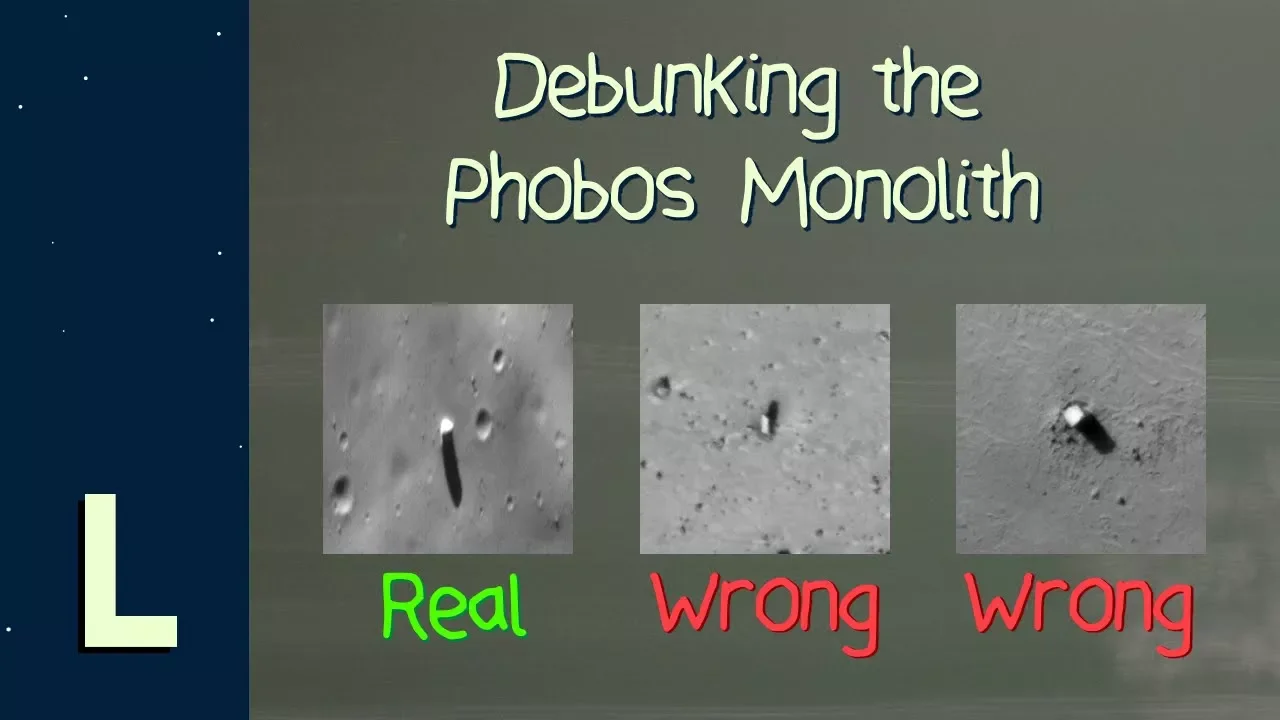
The piece began as a lighthearted look at the Phobos monolith but shifts to debunk the misinformation that surrounded it. Buzz Aldrin’s remarks sparked sensational claims, and they were frequently misquoted by figures like Alex Jones, suggesting alien installations and interplanetary beacons. A careful assessment shows many images claimed to depict the Phobos monolith are mislabeled or refer to other features. The actual Phobos monolith is a rock about 30–50 meters across and roughly 90 meters high by shadow, likely a product of natural processes. Since Phobos is too small to generate its own molten rock or tectonics, the monolith probably arose from debris from impacts, Mars ejecta, or a protruding block on Phobos’ surface. Some “monolith” images come from the Mars Reconnaissance Orbiter and the Mars Global Surveyor; the video provides links for independent verification. Despite the strong appeal of an artificial, space-spanning beacon, the evidence supports natural origins, with uncertainty remaining about the exact formation. Viewers are encouraged to examine the actual images and distinguish authentic Phobos material from lookalikes, recognizing that a striking rock is not proof of extraterrestrial engineering.
Source: youtube.com