youtu.be
Stephen Bruehl Ph.D.
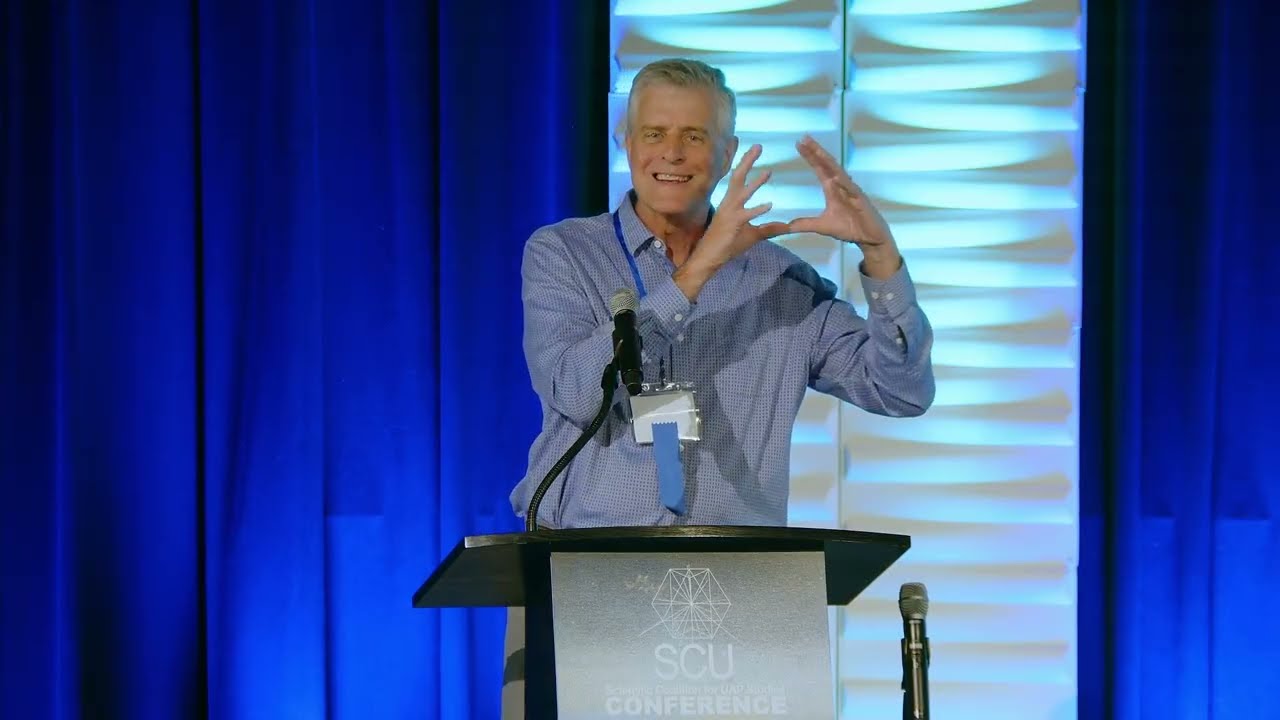
Stephen Bruehl received his Ph.D. in Clinical Psychology in 1994. He has worked as a biomedical researcher for most of his career. He is a tenured faculty member at a Tier 1 research university and currently conducts his own research studies and helps train the next generation of researchers. Dr. Bruehl has a longstanding interest in the UAP topic and began trying to apply his statistical skills to the study of UAP after attending the AAPC meeting last year in Huntsville. He is currently a contributing member of the SCU. The work he is presenting is described in a manuscript that is currently undergoing peer review for publication in a scientific journal.
Witness reports of unidentified aerial phenomena (UAP) contain descriptions of observed UAP characteristics and behaviors. We sought to gain insights into possible classes or types of UAP by applying two-step cluster analysis, a statistical pattern recognition technique, to data extracted from the select UAP report database (n=301) created by Powell et al. (2023). To create the clusters, we targeted shape, estimated size, ability to hover, presence of electromagnetic (EM) effects, and presence of sound, using the subsample (n=216) with complete data for these characteristics. We identified a model of good statistical quality (silhouette value = 0.6) with seven distinct clusters. Object shape was the primary driver of clustering results overall (disc, cylinder, triangle), however some distinct clusters were dominated by: absence of hovering (one comprised entirely of disc/sphere shaped UAP; one mixed in shape); presence of sound (mixed shape); and EM effects (disc/sphere or ovoid). Notably, of the objects exhibiting EM effects, 97% were viewed at estimated distances of ≤ 2,000 feet from the observer. Findings suggest that statistical pattern recognition techniques like cluster analysis can augment results of manual grouping of UAP types. Such techniques can extract subtle and meaningful information from high quality witness report data that will ultimately lead to an improved understanding of the nature of UAP.