
Stellar Space Weather Could Scatter Narrowband Signals, Explaining the Great Silence
To the point
SETI Institute researchers say space weather around stars—flares, coronal mass ejections and stellar winds—can smear ultra-narrow radio signals, expanding a Hz-wide beacon to tens or hundreds of Hz and often pushing it below telescope thresholds, which could explain the Great Silence; their Voyager/New Horizons–based modeling extended to Sun-like and red-dwarf stars shows many stars smear signals by more than 1 Hz (and stronger CMEs can exceed 1000 Hz), making red dwarfs especially relevant, with Grace Brown noting such distortion can guide searches toward survivable signals and Vishal Gajjar stressing the need to account for stellar activity when interpreting null results.

Imminent: Inside the Pentagon’s Hunt for UFOs
Luis Elizondo

Passport to Magonia: From Folklore to Flying Saucers
Jacques Vallee

The Extraterrestrial Species Almanac: The Ultimate Guide to Greys, Reptilians, Hybrids, and Nordics (MUFON)
Craig Campobasso
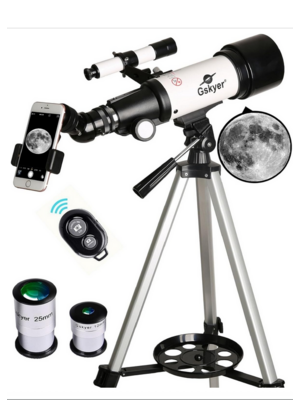
Gskyer Refracting Telescope
Our recommendations from Amazon
