
Data-Driven Disclosure: Verifiable Evidence and a Diversified Search for Extraterrestrial Signatures
To the point
Avi Loeb argues that proving whether nonhuman artifacts or life exist requires high‑quality, verifiable data from better sensors and an interdisciplinary, bias‑aware approach, so he’s formed a diverse advisory council and offers to help national security with improved data while rejecting political pressure and secrecy as guides to interpretation, amid calls for transparency from David Grush and Congresswoman Anna Paulina Luna.
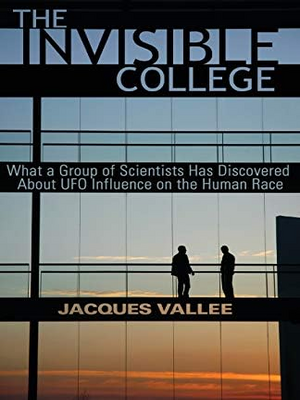



The interview delves into why David Grush and Congresswoman Anna Paulina Luna haven’t released more detail, with Avi Loeb stressing a gap between what they’ve been shown and what would be verifiable, and arguing that better data is essential before drawing conclusions. He points to secrecy around access—skiff environments and classified material create a disconnect between congressional briefings and what Grush describes—leaving open the fundamental question of whether the government actually possesses nonhuman artifacts or videos. Loeb then outlines a practical path forward: he is willing to aid national security by helping develop better sensors and data, and he has formed a diverse advisory council that includes AI/data experts, psychologists, anthropologists, philosophers, and a skeptic to guard against bias. He emphasizes that progress hinges on data quality, not speculation or online chatter, and he rejects letting political pressure dictate the interpretation of ambiguous sightings. A thread runs through his view of the historical record: older reports lack rigorous data, though intriguing anomalies persist, such as the peculiar activity surrounding the recent interstellar object and the methane questions raised by the three Atlas events, which he is exploring in ongoing work. He entertains the possibility of life beyond biology—technological, synthetic, or interdimensional—but remains rooted in evidence, ranking Oumuamua as four on a cautious scale and noting that a future mission to a dark comet could clarify whether some objects are human-made or genuinely extraterrestrial. Loeb also contemplates the social and policy implications of contact, suggesting that if disclosure happens, he would first process its impact before shaping any public guidance, aiming to steer humanity toward a more inclusive, interstellar mindset. Finally, he argues for a diversified scientific approach—investing in multiple avenues to detect technological signatures alongside microbial searches—to avoid stifling innovation and to maximize the chances of meaningful discovery.
Source: youtube.com