From blc1 to Verification: Distinguishing Technosignatures from Intermodulation Interference in Proxima Centauri Observations
To the point
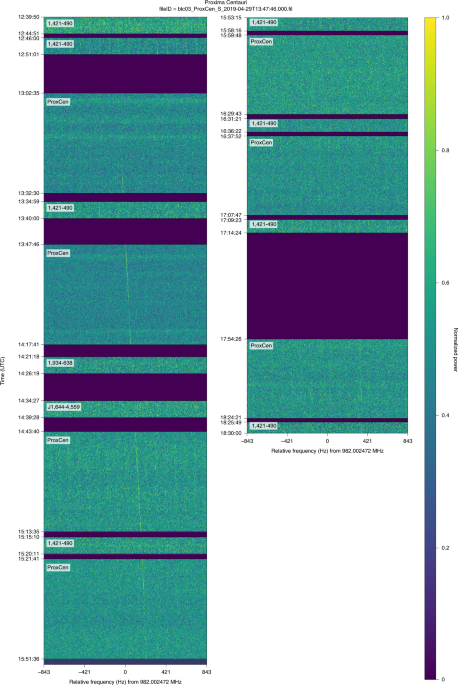
In 2019, researchers using the Parkes telescope to search for technosignatures around Proxima Centauri detected a narrowband signal near 982 MHz called blc1, but a rigorous verification showed it was a clock-oscillator intermodulation of local radio interference rather than a celestial source, prompting a practical checklist for validating narrowband signals, stressing multi-site observations and RF-environment mapping, with Sofia Z. Sheikh leading the analysis, Shane Smith and Danny C. Price uncovering blc1, and others contributing to simulations and interpretations, and all data and code openly available.