
From Arabic Linguist to Remote Viewing: Dr. Paul H. Smith and the Stargate Program
To the point
Paul H. Smith recounts his journey from Arabic linguist to Army intelligence officer in the Stargate program, explains remote viewing as a secure, blind-target practice that combines intention with non-local signals, shares notable hits and cautions about unverified targets, argues that consciousness is not simply brain identity, and outlines future research and resources for the field.

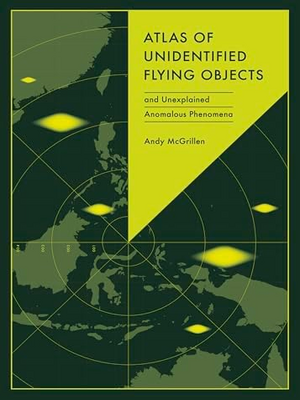


On the Jeff Mara podcast, Dr. Paul H. Smith, a former Army captain and Stargate program participant, describes his path from Arabic linguist to intelligence officer at Fort Meade, the SAP-style security around remote viewing, and how Stargate emerged as a response to Soviet parapsychology research. He credits Dale Graff with catalyzing the field by compiling data on the Iron Curtain programs and UFO research, and notes the CIA's initial modest funding via Hal Puthoff and Stanford Research Institute after Pat Price's early successes. Smith discusses his stance on consciousness, rejecting pure brain-identity theories, arguing the brain acts as a transducer or receiver of non-local signals, with a blend of localized and non-local aspects. He explains remote viewing mechanics: being blind to targets, using encrypted coordinates or taskers, and the role of intentionality and the right-brain vs left-brain dynamics; he emphasizes feedback and practice as essential to progress, not a weekend trick. He recounts several notable hits, such as the Typhoon submarine and a stealth aircraft related session, and the surprising UFO-targets like Mount Hayes that revealed near-miss ties to Pat Price's later material, while cautioning about anomalous targets lacking verification. He reflects on ETs or UAPs, noting mixed evidence and cautioning against overconfident conclusions about whether they are physical, interdimensional, benevolent, or dangerous, drawing analogies to cultural tropes like Star Trek or Independence Day. Finally, he outlines ongoing questions and future directions—brain imaging in remote viewing, deeper work on signal-to-noise, and the evolution of the field—while inviting listeners to his site rviewer.com, his Essential Guide to Remote Viewing on Amazon, and his telepathy-focused talks at conferences like Contact in the Desert.
Source: youtube.com