
UFOs, Religion, and the Limits of Understanding: A Discussion with Douthat and Pasulka
To the point
UFOs force a cross‑disciplinary conversation among science, religion, and politics, suggesting sightings may echo universal human experiences and point to a real but contested physical dimension, as explained by Vallée, Douthat, and Pasulka with Nolan, while Reid, Bigelow, Grusch, and Kean shape the ongoing government and media context and the search for credible explanations.

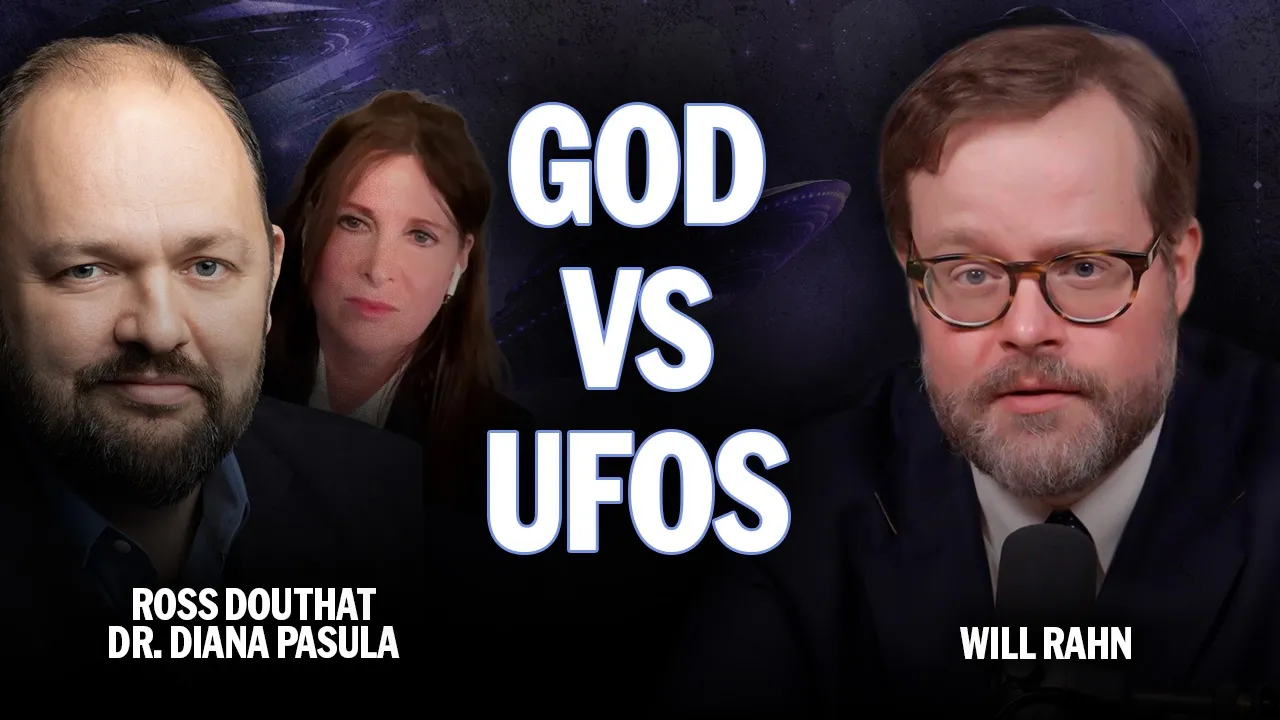
In this episode, Will Ron hosts Ross Douthat and Diana Pasulka to explore what smart people should think about UFOs, especially as questions touch on religion and the limits of human understanding. The conversation foregrounds Jacques Vallée’s view that sightings may echo long-standing religious and mythic experiences across cultures, and that even if non-human visitors exist, there may be a broader pattern to investigate beyond nuts-and-bolts explanations. Douthat describes his shift from skepticism to engagement after Navy pilot footage of unidentified aerial phenomena raised questions about how religious experience can illuminate the phenomenon, while noting surprising public interest from political leaders and government circles. Pasulka, drawing on Catholic theology, explains the preternatural category for non-human intelligence and recounts her Vatican-scale research and her experiences with alleged crash debris studied by scientists like Gary Nolan, which she says point to a real but contested physical dimension. They discuss the Tic Tac video and the 2017 disclosure push linked to Harry Reid and billionaire backer Robert Bigelow, arguing that the story helped propel ufology into a national-security frame even as it invites questions about motivation and credibility. The panel weighs disinformation theories about government campaigns, acknowledging their truth but arguing they cannot fully account for puzzling episodes and the persistent government curiosity that endures across administrations. Pasulka’s account of crash-retrieval claims and the on-the-ground investigation—where she and Nolan saw engineered debris—highlights the science-politics-mythology mix at the heart of the field and leaves the origin unsettled. In the lightning round, they temper expectations for Trump-era disclosures, question the certainty of Grusch’s claims, and name Leslie Kean as a highly respected researcher, closing with a shared sense that the question may ultimately hinge on religious as well as scientific or political interpretation.
Source: youtube.com