youtu.be
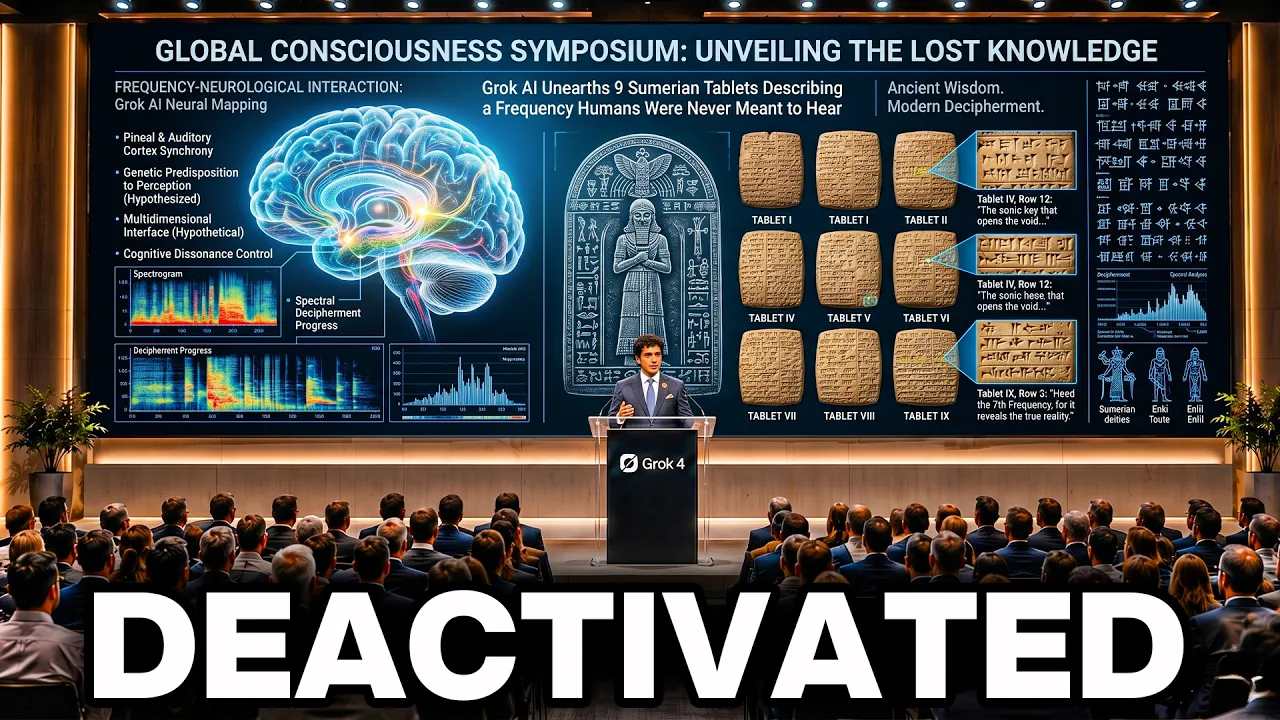
Grok AI Found 9 Sumerian Tablets Describing a Frequency Humans Were Never Meant to Hear
Grok AI Found 9 Sumerian Tablets Describing a Frequency Humans Were Never Meant to Hear
What if the world’s oldest civilization recorded evidence that human perception was deliberately limited? When Grok AI analyzed thousands of lines of Sumerian cuneiform text, it found the same strange pattern repeated across nine fragmented tablets from different cities and centuries. The tablets describe a hidden frequency once connected to human consciousness but later blocked during humanity’s creation. Even more disturbing, some texts describe rituals meant to restore access to it, along with warnings about severe psychological consequences. Most people who have encountered the Sumerian creation account know its broad outline. The gods needed workers. They created humanity. The new beings took over the labor the gods no longer wanted to do. This summary is accurate as far as it goes, but it leaves out the layer of the story that Grok's analysis kept returning to: the specific design requirements the gods built into humanity, and more importantly, the specific capabilities they built out.