
Fourth Batch of UFO Files: Nuclear-Facility Encounters and Ambiguous Imagery Across Seven Decades
To the point
Twenty-three videos, three NASA images, and fourteen documents spanning seven decades show a persistent pattern of unidentified objects near nuclear sites, with Dr. Phil McGraw and NASA chief Jared Isaacman cautioning that unidentified does not equal alien and urging more data, as some cases seem mundane while others remain unexplained and researchers are invited to study.




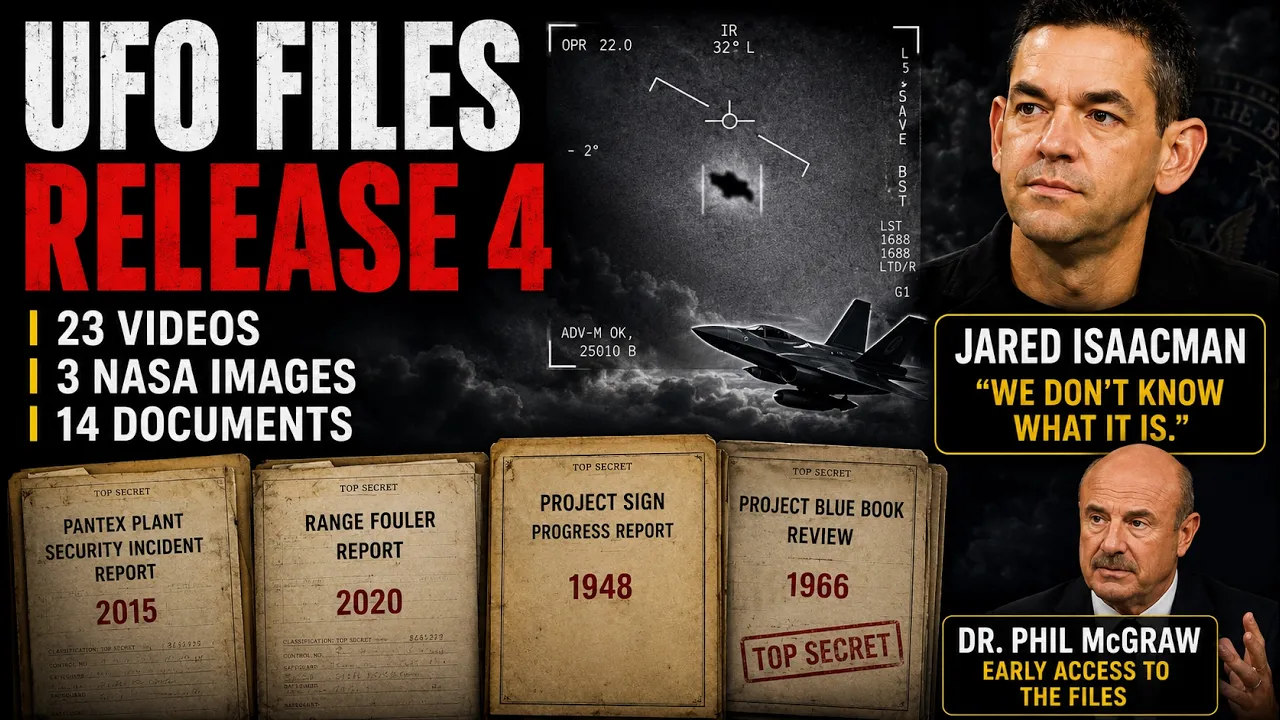
The fourth batch of UFO files includes 23 videos, three NASA images, and 14 documents spanning more than seven decades, from the 1940s to recent nuclear-site incidents such as Pantex in 2015 and Range Fowler reports from 2019–2020. Dr. Phil McGraw, connected to the Religious Liberty Commission, was granted early access and highlights a persistent pattern of objects near nuclear facilities dating back to 1949, with Los Alamos green-fireball discussions and related events. NASA administrator Jared Isaacman acknowledged imagery that cannot yet be explained, emphasizing that unidentified does not equal extraterrestrial and that more data is needed to turn cases into explanations. Four of the 23 videos are singled out as worth examining, while the rest are of mixed quality, often featuring distant dots, blurs, or motion that defies easy interpretation. A NASA image from STS-80 shows an unidentified object in low Earth orbit, with ongoing debate over whether it is ice crystals, debris, or something else due to limited context. The documents reveal a continuing pattern of formal recording of unidentified objects, including early 1948 Air Force/Navy analyses, 1949 Los Alamos discussions on green fireballs, and ongoing material from Project Sign and Project Blue Book. The overarching message remains that there is no confirmed recovered craft or non-human occupants; some cases are likely mundane, but others remain unidentified and intriguing, underscoring the need for better data and rigorous study. The release invites researchers and listeners to investigate the material, with upcoming interviews teased to broaden the discussion.
Source: youtube.com