
Star-Driven Space Weather Broadens Narrowband Signals, Redefining SETI Search Strategies
To the point
Led by Vishal Gajjar, the study shows space weather around distant stars can broaden narrowband signals into wider, dimmer forms before they reach Earth, with about 70% of 1 GHz systems broadening by ~1 Hz and 30% by more than 10 Hz, and stronger effects at 100 MHz around M-dwarfs, potentially wiping out a signal if a coronal mass ejection aligns with a search, so future SETI surveys must account for Doppler shifts and home-star broadening and be built to accommodate this reality from the start, as Grayce Brown notes while revisiting Cocconi and Morrison’s hydrogen-line idea.

After the Flying Saucers Came: A Global History of the UFO Phenomenon
Greg Eghigian

UFO Crash Retrievals: The Complete Investigation
Leonard Stringfield
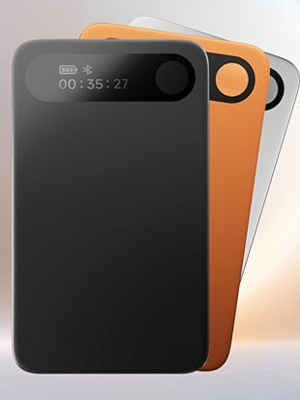
Comulytic Note Pro AI Voice Recorder, Unlimited Transcribe & Summarize

Passport to Magonia: From Folklore to Flying Saucers
Jacques Vallee
Our recommendations from Amazon
