
Toward Credible UAP Science: Data-Driven Best Practices and International Collaboration
To the point
Michael Gold, Beatrice Via Royale, and Cecilia Levy argue that a global, data-driven UAP research program with transparent archives, rigorous methods, and international collaboration can replace stigma with credible knowledge and attract sustained funding.


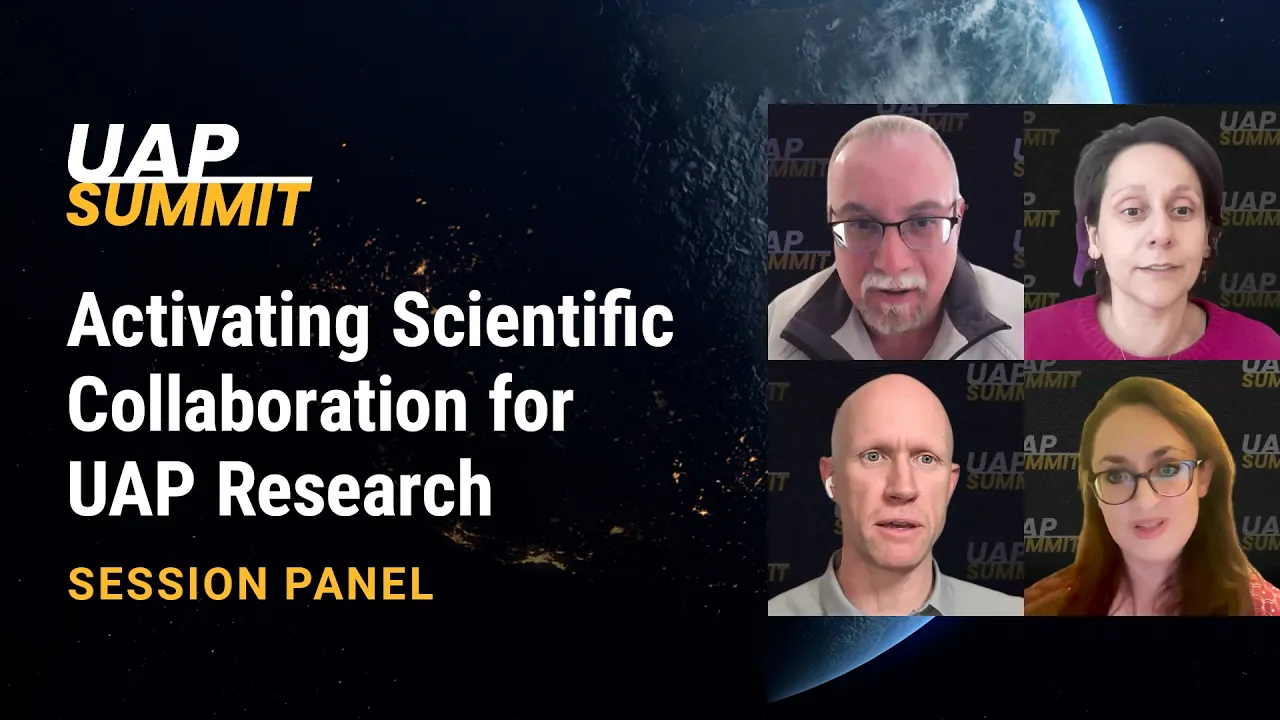
The session focuses on how to engage the scientific community in UAP research to generate critical data, credible analyses, and new knowledge, covering research best practices, publication, peer review, funding, and international collaboration. Michael Gold, sharing his background with Bigelow Aerospace, NASA, and Redwire, underscores NASA’s leadership roles—from Artemis to the Artemis Accords and the UAP Independent Study Team—and argues that official engagement helps counter stigma and unlock data that could advance understanding of the phenomenon, including the possibility of unclassified evidence worth reviewing. The discussion advocates concrete steps such as reviewing NASA’s archives with AI/ML to surface meaningful anomalies, examining phenomena like lunar horizon glow, and leveraging the aviation safety reporting system (ASRS) to turn pilots and crews into sensors, all while highlighting safety and national security considerations in a global context anchored by the Artemis framework. Beatrice Via Royale and Cecilia Levy add that credible research must avoid treating UAP as a dumping ground for unexplained cases, instead using toy models and rigorous scientific methods to define provisional classifications and targeted experiments, with an emphasis on repeatable, high-quality data and peer review to win broader academic acceptance. They stress that data quality is the central challenge for the field and advocate for sustained, international collaboration, capable instrumentation, and transparent methodologies—seeking funded, coordinated efforts similar to Albany’s Project X, which underscores the need for observatories, standardized data, and reproducible results. Funding challenges in the U.S. are acknowledged, with private donors currently playing a role, while international examples from Sweden demonstrate how early pioneers can spark government and private support as the field gains legitimacy, suggesting observatories and structured data programs as viable paths forward. The conversation also addresses sensor requirements, favoring multi-spectral approaches (optical and infrared) with redundancy and expanded data channels to identify observables beyond any single instrument, and calls for ongoing dialogue between scientists and technologists to translate field observations into scientifically valid evidence. In the Q&A, topics include NASA and FAA data-sharing procedures, the need for formalized reporting channels, astronaut sightings, and the potential for public data release, all culminating in a shared call for transparent archives, reproducible methods, and cross-disciplinary collaboration to move the field from stigma to discovered science. The session concludes with an invitation to continue the dialogue and to build a robust, data-driven pipeline that can sustain research, attract funding, and inform international cooperation on UAP.
Source: youtube.com