
Open-Science Inquiry into Unidentified Anomalous Phenomena: The Ubatuba Case
To the point
Dr. Gary Nolan leads a careful, open‑minded investigation into unidentified anomalous phenomena, weighing disclosure, examining three data streams (anecdotes, environmental perturbations, and physical artifacts), considering neutron‑exposure clues from cases like Ubatuba, drawing on Jacques Vallee’s view that such phenomena may shape human thinking, and advocating open‑source science and public–private partnerships to accelerate discovery despite major challenges.

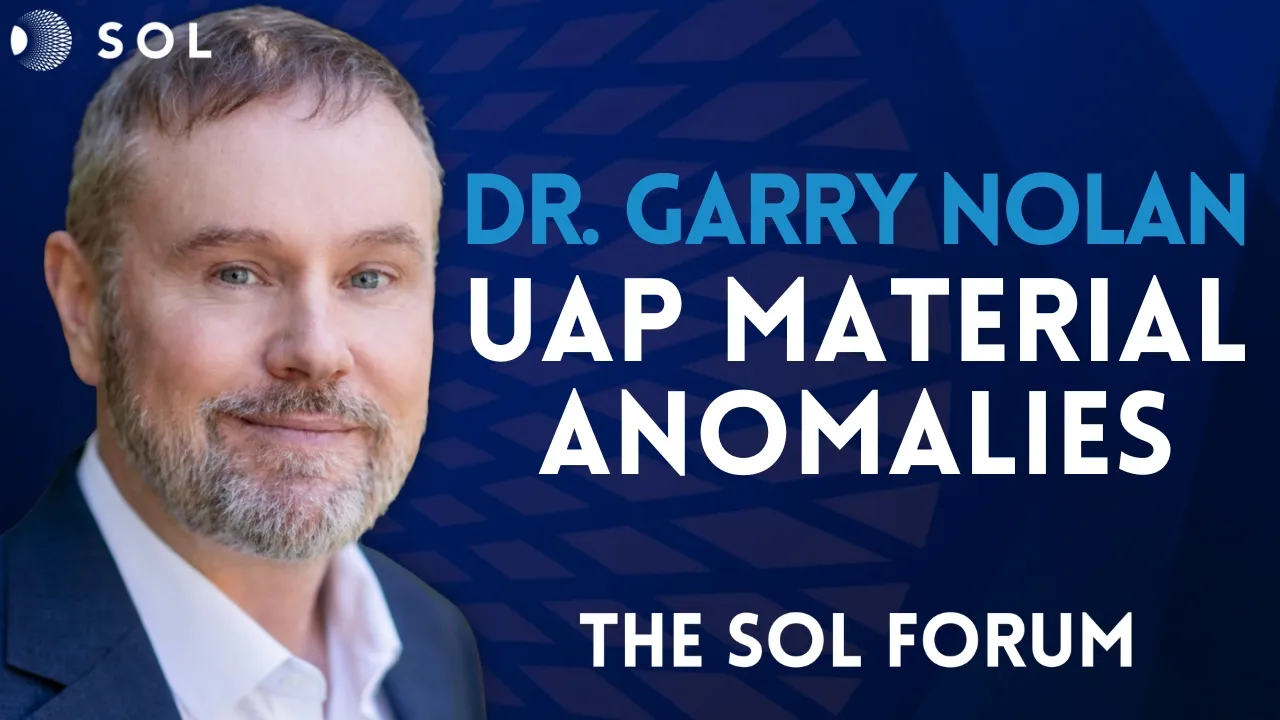
The exchange probes unidentified anomalous phenomena through a rigorous, open-minded scientific lens, anchored by Dr. Gary Nolan and a platform for continuing inquiry. The talk weighs the timing and nature of disclosure, contrasting declassification with “begin the process,” and noting how such wording, including statements by Obama, shapes government briefings and public expectations. Nolan argues that disclosure would alter self-perception and that even tentative openness could spur institutional push for responsible release and further research. The discussion distinguishes anecdotes, perturbations in the environment, and physical artifacts—metals with anomalous isotopic ratios, as well as biological specimens—as three data streams to evaluate. In the Ubatuba case, initial magnesium readings were challenged when atomic-probe tomography revealed near-pure silicon in the samples, and subsequent isotope analyses suggested neutron exposure patterns that could shift Mg and Si ratios in ways hard to explain by conventional processes. The team considers neutron bombardment models and cross-checks results with multiple labs to guard against systematic errors, illustrating a rigorous, collaborative scientific approach. Jacques Vallee’s control-system theory is invoked, proposing that such phenomena may function as a pedagogy or interface that entrains human cognition rather than simply signaling alien intent. The conversation widens to non-human intelligences, imagining AI or advanced bioengineered substrates as potential futures, and the possibility that materials could embody multifunctional complexity beyond current human craftsmanship. Finally, they advocate open-source science and public-private partnerships to accelerate discovery, arguing that broad collaboration could accelerate benefits for medicine, energy, and society while acknowledging the daunting epistemic and logistical challenges.
Source: youtube.com