No Confirmed Technosignature Detected Toward Proxima Centauri; BLC1 Identified as Local Interference in Parkes Murriyang Search
To the point
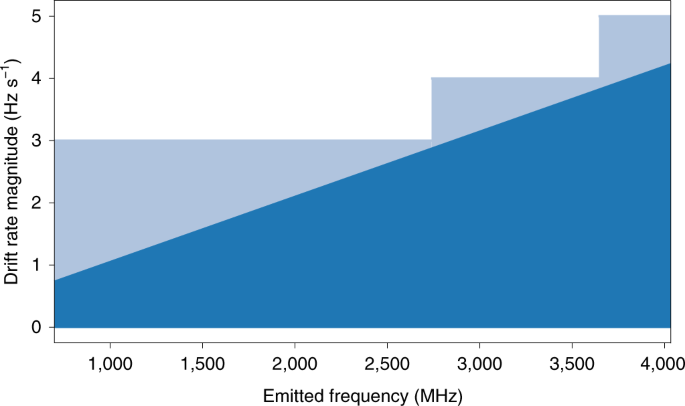
Shane Smith and colleagues, including Danny C. Price and Sofia Z. Sheikh, carried out a Parkes Murriyang radio search toward Proxima Centauri across 0.7–4 GHz with long on-source observations and RFI rejection, found 4,172,702 hits above signal-to-noise and 5,160 on-source–off-source events but only one feature survived filtering—BLC1 at 982.002571 MHz with a drift rate of 0.038 Hz/s for about 2.5 hours—later attributed to unusual locally generated interference rather than a technosignature; they achieved a minimum detectable isotropic radiated power of 1.9 GW thanks to a system temperature of 22 K and 30-minute on-source observations, used turboSETI to search for narrowband signals with Doppler drift by modeling motions of Proxima Centauri b and Earth, and applied multi-stage filtering to separate real signals from RFI, found no confirmed technosignature, and note data and tools (Blimpy and turboSETI) are publicly available, that Proxima Centauri remains a key target for future searches, and that broad spectral coverage is still incomplete and interpretation requires rigorous verification, as discussed in a companion paper.