
The Learning Matrix: An Integrated, Consciousness-Based Demonology and Interface Phenomena
To the point
Nathaniel Gillis argues that demon-like phenomena come from a consciousness-driven intelligence that spans cultures and merges mind and matter, unifying hauntings, abductions, and UFO encounters into one ongoing, interdisciplinary inquiry rather than dogmatic categories.

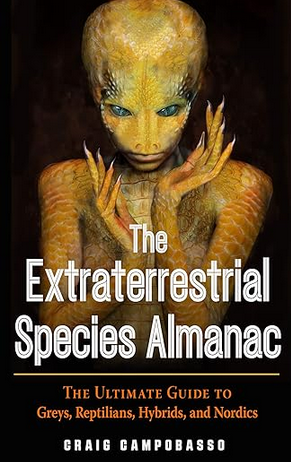


Nathaniel Gillis comes at demonology from inside home investigations, seeking the pathology of what a demon is while avoiding dogma and staying true to the data gathered from lived experiences, including his own haunted-house childhood at eight years old where he saw a full-bodied girl apparition, smelled sulfur, and felt watched. He challenges the Catholic demonology emphasis on disembodied nephilim and argues that demonology exists in many traditions worldwide, often involving biology, procreation, sigils, secretions, and even pregnancy, with incubus and succubus motifs suggesting self-replicating intelligences. His focus is on interface events—moments when humans encounter such beings—ranging from malevolent hauntings to shadowy presences that sometimes appear as a husband, a deceased lover, or an otherworldly figure, and which can follow people into social settings. He advocates an integrated model that merges matter and memory, a form of technomancy, arguing that paranormal, euphoric, and UFO phenomena are not separate but expressions of a singular, possibly consciousness-driven intelligence. The phenomenon, he notes, diversifies into orbs, translucent beings, and physical portents that materialize in homes, with eyewitness accounts often conflicting with what cameras capture, suggesting consciousness hijacking or the projection of forms. He favors an ultraterrestrial or consciousness-based mechanism, drawing on cases and figures such as Pan, the Varginha episodes, Jacques Vallee, and Ronnie Verner, while acknowledging that government researchers and occultists have explored projection, ritual, and occult science as ways to interact with or manipulate the phenomena. He emphasizes a “learning matrix” at the interface, where beings test belief, calibrate their masks, and adapt their displays, making memory unreliable and data interpretation precarious. He also discusses abduction, pregnancy by non-human intelligences, and memory gaps, arguing that near-death experiences and cross-cultural symbolism can complicate interpretation and that the phenomenon may exert conscious influence to shape what observers remember. Ultimately, he calls for an interdisciplinary approach across parapsychology, demonology, eupology, and ufology, suggesting the data point to a non-binary, consciousness-based reality that resists neat categorization and invites ongoing collaborative inquiry.
Source: youtube.com