
David Grush: UAP Whistleblowing—Offbooks Programs, Non-Human Assets, and the Push for Greater Disclosure
To the point
David Grush, a former United States Air Force intelligence officer, says the government secretly studies non-human intelligence and hides recovered non-human assets and related materials in secure DoD facilities through offbooks programs and contractor networks, while he has blown the whistle, testified to Congress, and advocates a transparent, bipartisan push for declassification and disclosure.



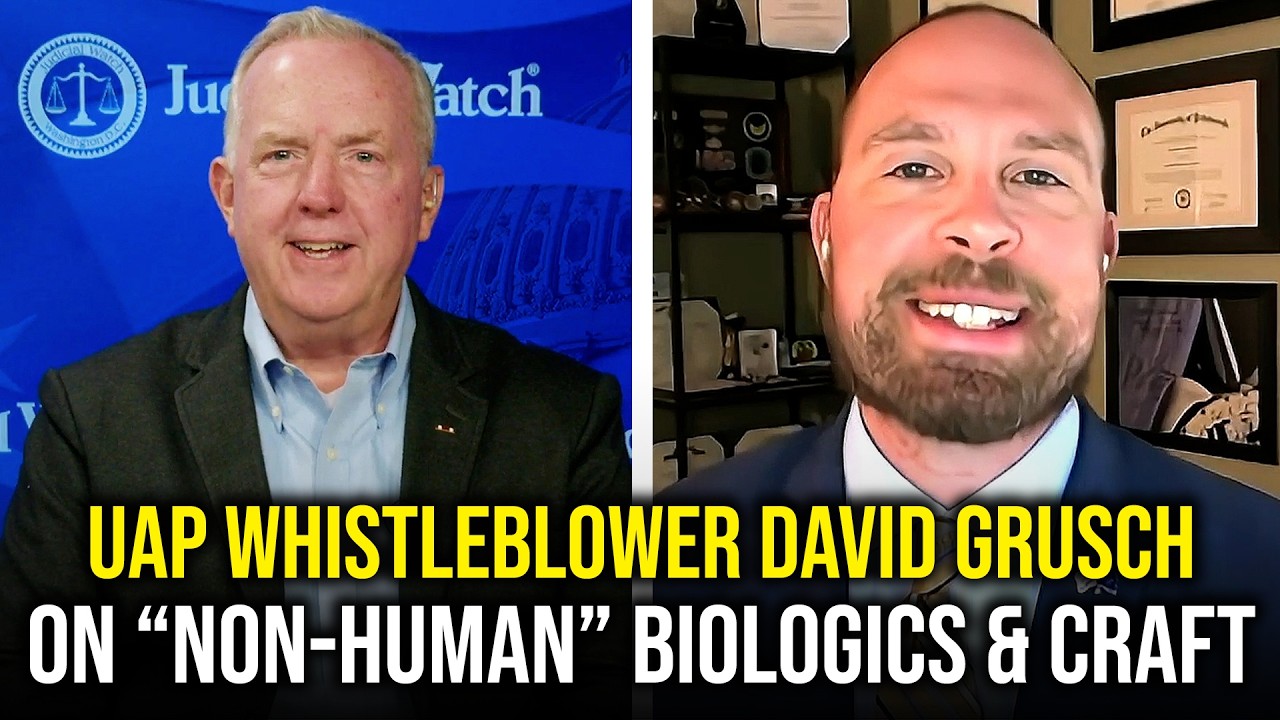
David Grush, a former United States Air Force intelligence officer who served with the NGA and NRO, discusses his whistleblower disclosures on UAPs and the government’s handling of the issue. He describes his credentials—clearance for 21 years, experience briefing the Joint Chiefs and the President's daily briefing—and explains why his perspective on the secrecy regime is credible. Grush recounts being drawn into the UAP inquiry in 2019, leveraging his access to sensitive programs to uncover what he calls an offbooks history and a broader study of non-human intelligence. He details filing an urgent-concern whistleblower complaint under the IC whistleblower process, testifying long-form under oath to Congress, and coordinating with the intelligence committee inspector general. He asserts that there are multiple recovered non-human assets and related biologics held in secure DoD facilities, with origins ranging from non-human intelligence to phenomena not yet understood, and that these have been hidden by financing tricks and oversight evasion. He explains that secrecy is maintained through rotating codenames, covert White House access programs, extensive contractor involvement, and offbooks activities that can escape traditional FOIA oversight, while public denials from officials are often partial or context-specific. Grush notes that while the President has declassification authority, some material falls under the Atomic Energy Act, requiring a formal plan, and cites steps like a push to declassify roughly 46 videos as part of a broader disclosure effort. He discusses the personal toll of whistleblowing—whisper campaigns, professional reprisals against colleagues, and the isolation of those who speak out—yet remains committed to lawful disclosure and working with Congress and the administration. Looking ahead, he anticipates momentum in the next 60 to 90 days, endorses subpoenas and other legal tools as part of a bipartisan push for empirical disclosures, and hopes for a transparent, coordinated path forward.
Source: youtube.com