
High-Strangeness Clusters and the Observer: Toward a Unified Anomaly Model from Skinwalker Ranch and the Uintah Basin
To the point
UFOs/UAP come from one underlying anomaly system that can manifest as many different cross-domain effects, including lights, orbs, levitating objects, cryptid sightings, and electromagnetic disturbances, especially at hotspot areas like Skinwalker Ranch and the Uintah Basin, with observer interaction and instrumentation potentially amplifying or triggering the manifestations, a topic explored by Exoacademian and researchers such as James Latsky, George Knapp, Col Kellaher, and Brandon Fugal.
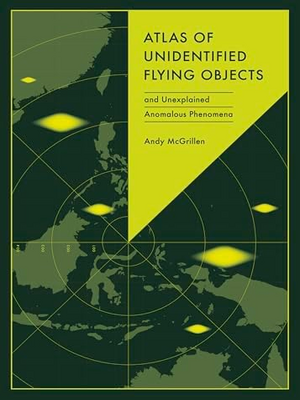
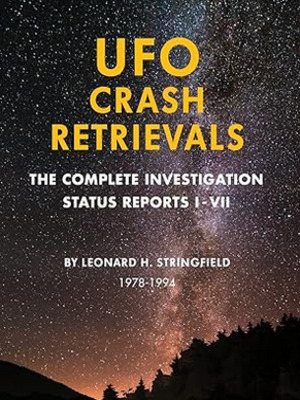


Episode 132 of Point of Convergence, hosted by Exoacademian, argues that UFOs/UAP are best understood as part of clusters of high strangeness—a broader pattern of perceptual, environmental, and consciousness-linked anomalies rather than isolated aerial craft. The discussion centers on Skinwalker Ranch and the Uintah Basin, where the Bass OAP investigation showed sightings co-occurring with cryptid reports, poltergeist-like phenomena, electromagnetic disturbances, and sensor malfunctions. A key takeaway is that the data hint at a single, underlying anomaly system that can manifest in varied ways across domains, raising questions about the nature of reality and the observer’s role. The Bass OAP materials reveal that observations cluster in hotspots with terrain features, geomagnetic anomalies, and repeat location nodes, suggesting localized anomaly attractors. Reports include striking micro-events—orange spheres absorbed into rock, levitating tubular objects, stick-figures, and eyewitness accounts of interventions—illustrated in a 2007 Skinwalker Ranch account cited from Inside the US Government Covert UFO Program, New Insights. Across California’s Legol site and Fort Duchesne areas, witnesses describe bright orbs, hums from underground sources, dog-like or werewolf entities, and other cross-domain phenomena, reinforcing a multimodal reality-bending dynamic. The analyses emphasize an observer-engagement dynamic: instrumentation can amplify manifestations while persistent probing can trigger withdrawal or boundary enforcement, suggesting a relational, possibly sentient system rather than passive objects. While some researchers favor a unified high-strangeness model, there remains debate about reconciling these findings with mainstream science and official authorities, leaving open questions for future inquiry that figures like James Latsky, George Knapp, Col Kellaher, and Brandon Fugal continue to explore.
Source: youtube.com