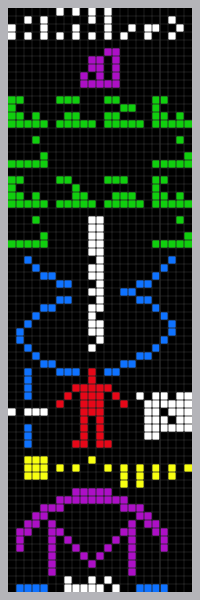
The Arecibo Message: Fifty Years Since a 1,679-Bit Broadcast Toward M13
To the point
Frank Drake and Carl Sagan helped send the first intentional message to space from Arecibo, encoded in binary with basic biology, DNA, Earth’s place in the solar system, and a simple human figure, taking three minutes to transmit 1,679 bits from a 1,000‑foot dish with megawatt power toward the M13 cluster, a signal that would be detectable across the galaxy if there were receivers, the cluster has since drifted about 50 light‑years closer to us, and the telescope collapsed in 2020, marking a milestone in the push to contact life elsewhere and in broadcasting Earth’s presence.
Comulytic Note Pro AI Voice Recorder, Unlimited Transcribe & Summarize

Behold a Pale Horse
Milton William Cooper
Imminent: Inside the Pentagon’s Hunt for UFOs
Luis Elizondo

The Extraterrestrial Species Almanac: The Ultimate Guide to Greys, Reptilians, Hybrids, and Nordics (MUFON)
Craig Campobasso
Our recommendations from Amazon