
A Fragmented Archive: The First 161 Washington DC Files Spanning FBI Records, Space-Era Material, and Historical Anomalies
To the point
161 Washington DC documents constitute a decades-spanning, non-cohesive collection of UFO material, from early FBI files and 1950s clippings to Gemini/Apollo era data and recent ISR reports, featuring Carl Jung, Buzz Aldrin, Carol Rosen, and Steven Greer, with Cometa among the materials, but the evidence stays inconclusive, making it a curated archive of anomalies rather than definitive answers.

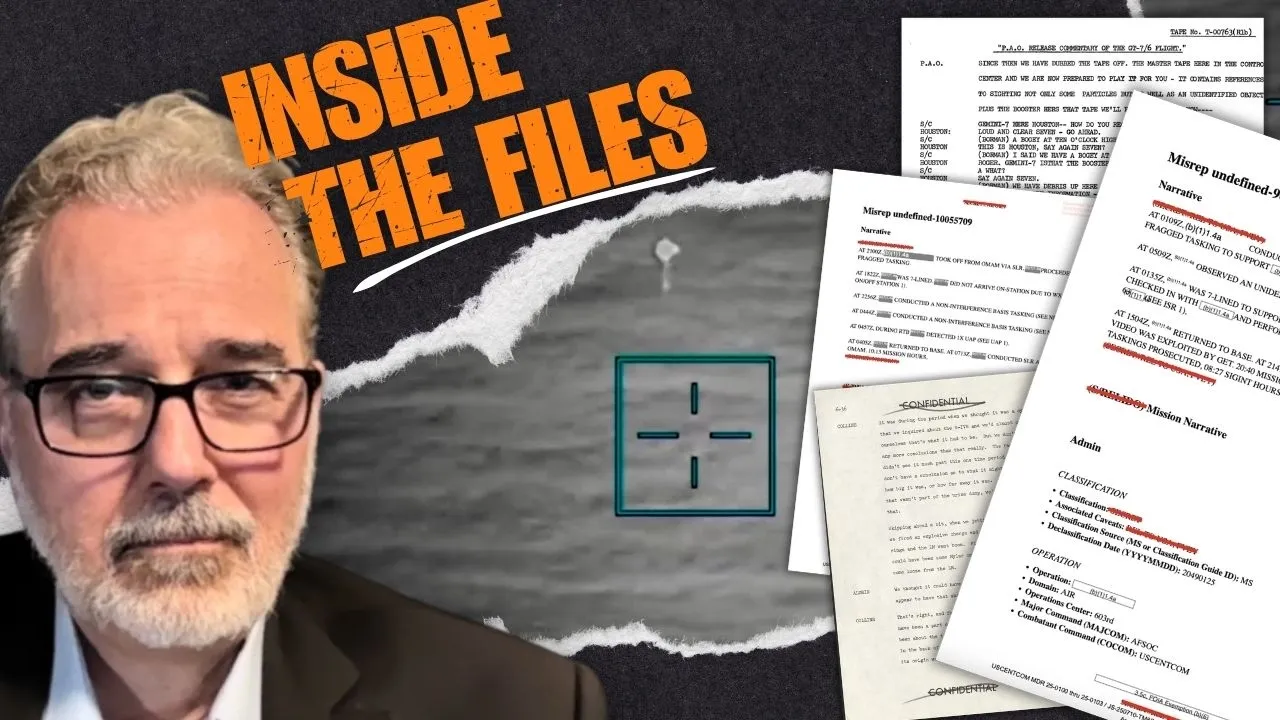
The first tranche of 161 released files from Washington DC comprises a non-cohesive mix spanning decades: early FBI documents from the 1947-1950s, 1950s newspaper clippings, space-era material from Gemini and Apollo, and a handful of recent ISR reports with accompanying PDFs. Among items are historical but not novel pieces such as the Green Fireball sightings from 1950, Carl Jung's interest, and a French Cometa report (1999) whose authors tentatively suggest beyond-known-technology and sometimes entertain extraterrestrial possibilities, though not definitively. The collection also includes Buzz Aldrin's later remarks about Apollo 11's in-flight observation, which show real-time uncertainty and evolving interpretations; a 1969 transcript reveals discussion of an object with possible structural features, ultimately leaning toward a reflection from a booster rather than a definitive encounter. Carol Rosen's involvement and the 2001 disclosure push linked to Steven Greer are contextualized alongside the non-official yet influential Cometa and KDA materials. A TurkManistan NGO-related item illustrates how such materials circulated within geopolitical information campaigns rather than as concrete evidence. Modern clips from Greece (2024) and the UAE show brief, benign observations with matching PDFs, often read as drones rather than genuine anomalies, and the mismatch between videos and accompanying reports complicates interpretation. A recurring pattern emerges: observations are cataloged and narrated but rarely concluded, producing a public narrative that can outpace the evidence and leave many cases unresolved. The overall impression is not disclosure of definitive phenomena, but a curated archive that preserves historical anomalies while remaining inconclusive, offering nuggets for researchers without delivering definitive answers.
Source: youtube.com