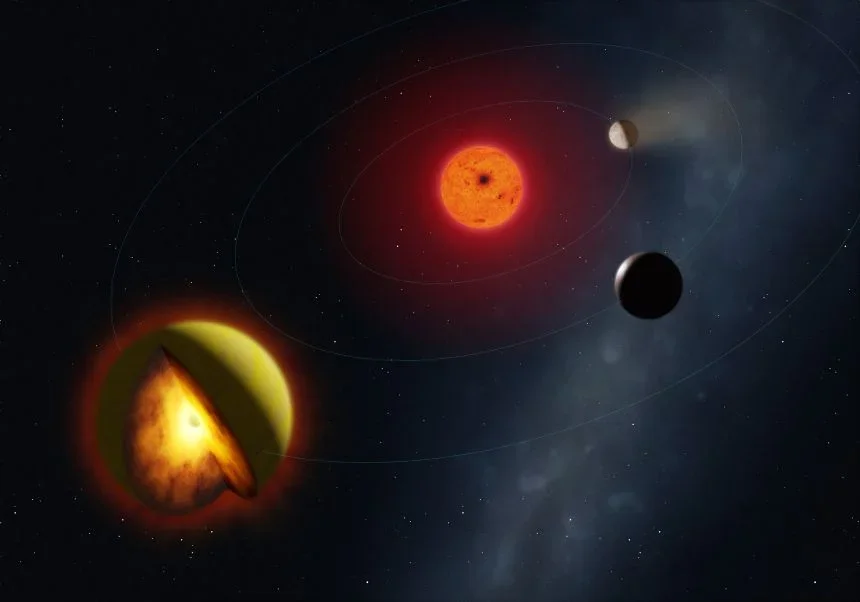
L 98-59 d: A sulfur-rich magma-ocean world redefining small-planet classification
To the point
L 98-59 d is a small exoplanet with a long-lived magma ocean that stirs a sulfur-rich atmosphere, JWST detects hydrogen sulfide and sulfur dioxide high in the atmosphere, and modeling by Harrison Nicholls and colleagues suggests it formed with lots of volatiles but lost most of that gas under strong X-ray irradiation, leaving a hydrogen-dominated atmosphere while the molten interior slowly releases sulfur for billions of years, a scenario Raymond Pierrehumbert and Richard Chatterjee say could define a new class of sulfur-rich magma-ocean worlds at the rocky/gas boundary with important implications for missions like Ariel and PLATO and for future machine-learning searches.