
Data-Driven UAP Disclosure: Instrument-Based Proof, AI Analysis, and Global Cooperation for 2030
To the point
Avi Lo and Michael Shurmer argue that real progress on UAPs comes from open, instrument-based science—gathering precise data, triangulating distances and speeds with AI, and confirming findings with imagery and isotopic analysis—paired with governance and data-sharing, rather than headlines or testimonies, with the aim of robust understanding and the potential for future interstellar exploration.

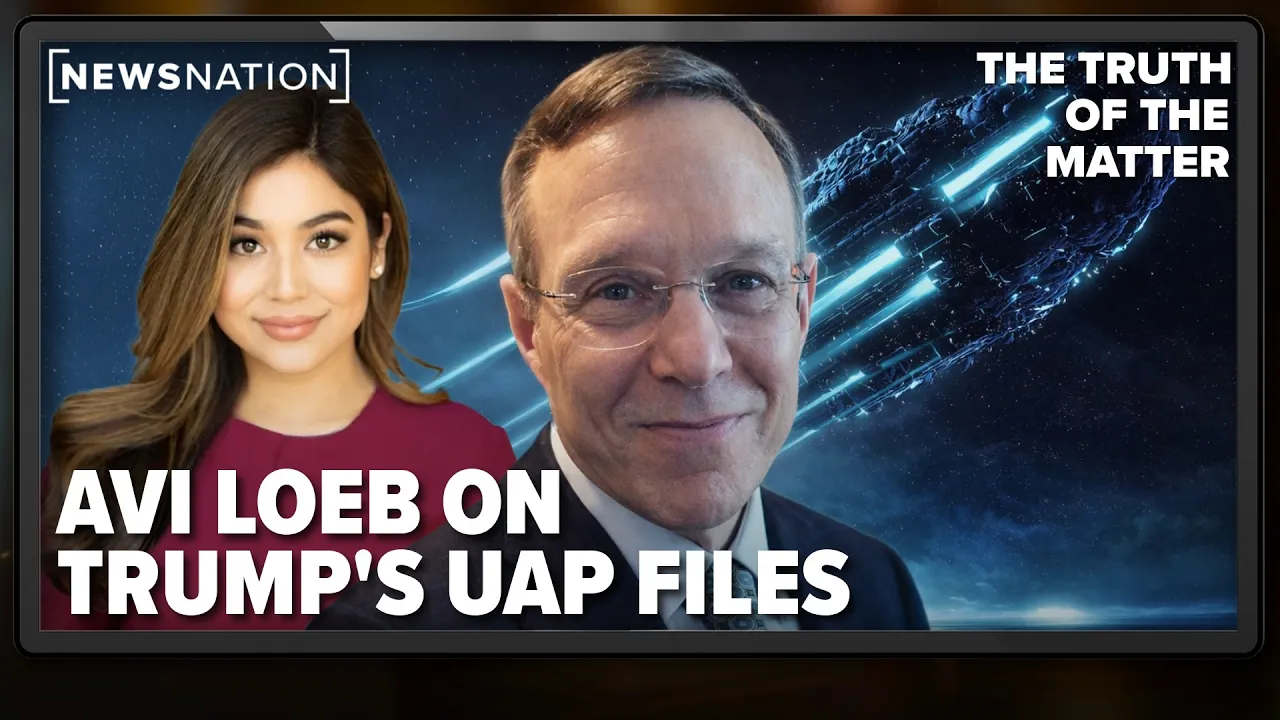
The conversation probes whether the government is about to reveal long-held secrets about UAPs, noting recent remarks by Trump and Obama, while emphasizing that meaningful progress hinges on transparent, evidence-based science rather than headlines. Avi Lo, head of the Galileo Project, explains that progress comes from data—determining distances, speeds, and trajectories through triangulation and using AI to sift millions of observations—without waiting for official disclosures. He envisions a practical framework of detection, potential interception, and rigorous analysis of materials, recalling the discussion around the interstellar object 3I Atlas and how fuel and timing can limit intercept opportunities. He stresses that proof must be instrument-based, including imagery and isotopic analysis to distinguish solar-system from extrasolar origins, and he cautions that testimonies alone are unreliable. The dialogue broadens to possibilities of intelligent neighbors, extinct civilizations, and interstellar probes, while acknowledging risks and the need for robust data to guide conclusions. They consider governance and declassification, including the All Domain Anomaly Resolution Office and a possible UAP disclosure board, arguing that public data sharing could complement what the government already holds. Lo critiques the arrogance of expertise in science, urging openness to anomalies and citing cases like Oumuamua to illustrate how conclusions must follow the data. They address AI and misinformation, recounting Lo’s experience with AI-generated deepfakes, his push to publish accessible data to counter fakes, and the necessity of cross-checking with primary sources. Looking ahead, Lo advocates cooperation over zero-sum competition, envisioning a space platform capable of housing humans beyond the solar system rather than pursuing Mars, and he stresses that evidence and collaboration could unite nations. He ends with a personal willingness to take a one-way journey to meet extraterrestrials, even staking a modest $1,000 bet with Michael Shurmer that solid evidence will arrive by 2030, highlighting his commitment to science and the pursuit of discovery.
Source: youtube.com