
Plasma Life Across the Cosmos: Self-Organizing Information in Plasmoid Systems
To the point
Life is a self-organizing flow of information powered by plasma patterns rather than chemistry, a concept proposed by Freeman Dyson and expanded by Gerald Fineberg and Robert Shapiro to envision plasmoid brains and ecosystems in gas giants, rocky worlds with volcanism, stars and nebulae, and even engineered plasma systems, where magnetic fields and energy flow sustain cognition across cosmic scales.

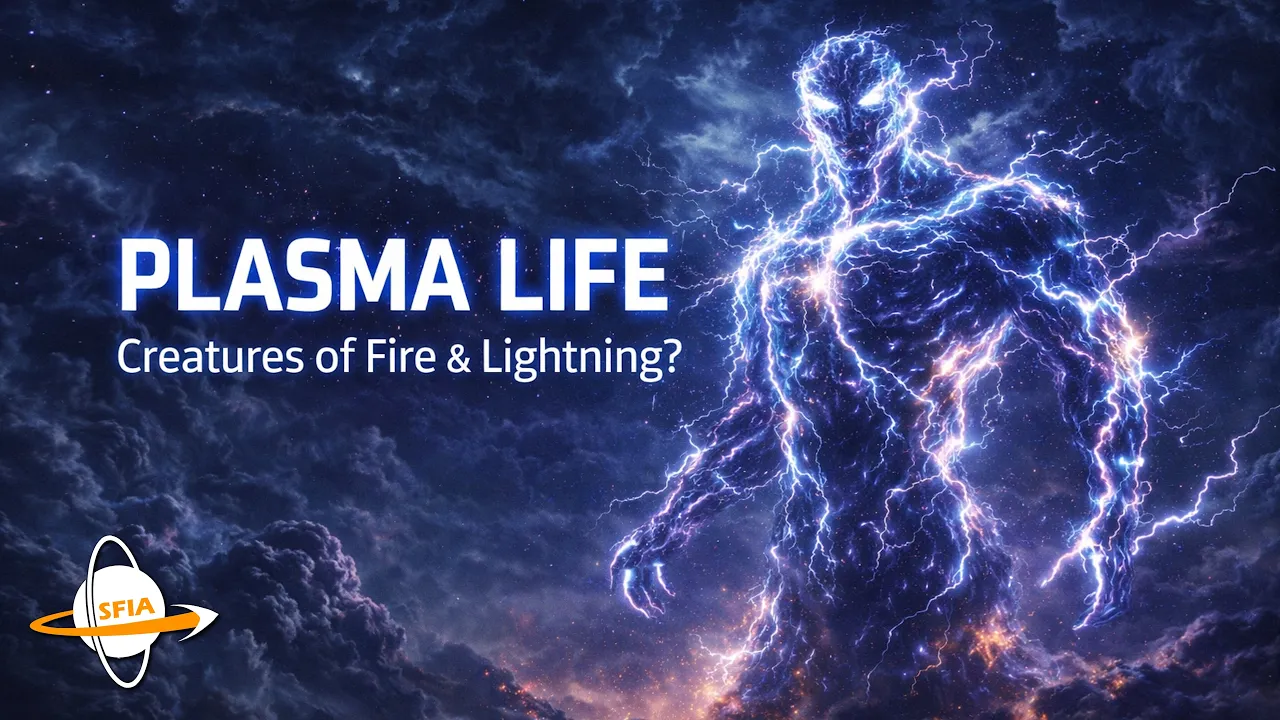
Life could extend beyond carbon into plasma-based forms where self-organization and energy flow matter more than chemistry. Freeman Dyson proposed that gas giants might host buoyant, convection-driven “fire-based” ecologies, with energy gradients and feedback loops shaping proto-organisms. Gerald Fineberg and Robert Shapiro expanded this to plasmoid life, imagining magnetic confinement, electrical metabolism, and neural networks realized as oscillations in magnetic webs. On rocky worlds with extreme volcanism and lightning, plasma vortices stabilized by magnetic fields could act as energy-rich, self-sustaining structures that store information in their dynamics. Gas giants offer layered atmospheres where plasmoids and charged particles could form food chains and predators, communicating via radio bursts or oscillating magnetic signatures. In stars and cooler dwarfs, magnetic knots and currents might host slow, enduring minds whose thoughts unfold over minutes to millennia, with stellar plasma structures serving as cognitive substrates. Even in nebulae and interstellar space, large-scale plasma networks could conceivably harbor fragile, galaxy-spanning minds whose signals propagate over years or centuries. Some thinkers even imagine engineered plasmoid brains powered by fusion or harnessed plasmas in gas giants, blurring lines between biology and plasma patterns. Ultimately, plasma life suggests that life is a pattern of self-organizing information flow, not just chemistry, reminding us that the universe’s imagination can be far larger than our own.
Source: youtube.com