Beta-Convolutional Variational Autoencoder Streamlines Technosignature Searches in Breakthrough Listen Data
To the point
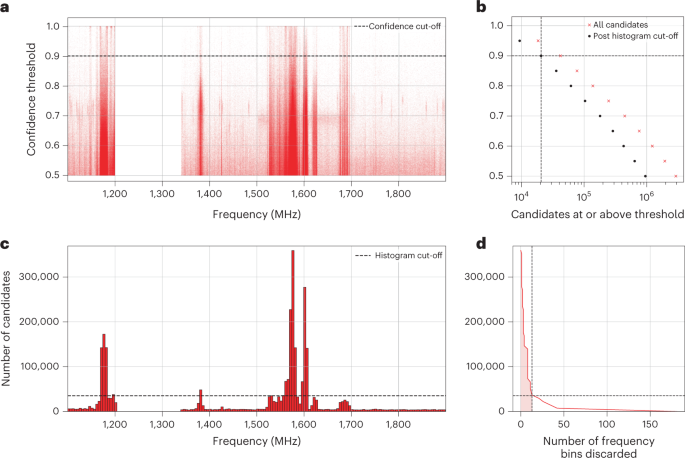
Using a beta-convolutional variational autoencoder, researchers analyze 480 hours of Green Bank Telescope data from 820 nearby Hipparcos stars to search for signs of alien technology in narrowband, Doppler-shifting radio signals; the semi-unsupervised approach greatly reduces false positives and cuts the candidate list by about 100x compared with earlier work, identifying eight new signals that haven’t been seen before but could not be reproduced on follow-up, illustrating that machine learning can accelerate SETI and related transient radio studies, with data and code publicly available.