springer.com
Lotka–Volterra models for extraterrestrial self-replicating probes - The European Physical Journal Plus
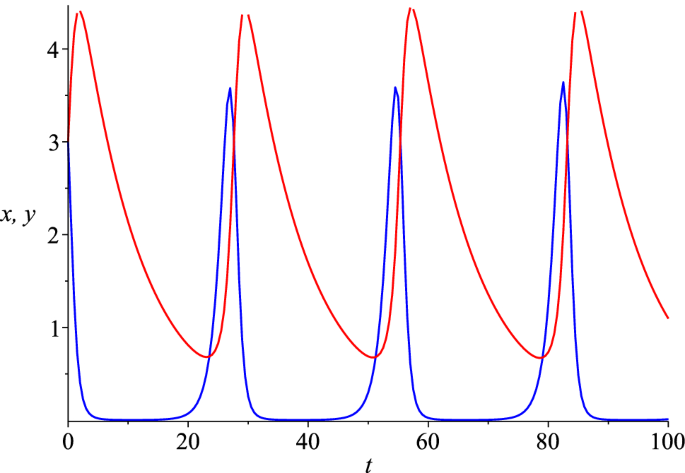
A sufficiently advanced extraterrestrial civilization can send out a swarm of self-replicating probes for space exploration. Given the fast-growing number of such a probe, even if there is only one extraterrestrial civilization sending out such probes in the Milky Way galaxy, we should still expect to see them. The fact that we do not consist part of the Fermi paradox. The suggestion that self-replicating probes will eventually mutate to consume their progenitors and therefore significantly reduce the number of total probes has been investigated and dismissed in the literature. In this work, we revisit this question with a more realistic Lotka–Volterra model and show that mutated probes would drive the progenitor probes into “extinction,” thereby replacing them to spread throughout the galaxy. Thus, the efficiency of mutated probes in reducing the total number of self-replicating probes is even less than previously thought. As part of the analysis, we also suggest that, somewhat counter-intuitively, in designing self-replicating probes, one should not program them to stop replicating when sufficient mutation causes the probes to fail to recognize the progenitor probes as “self.”