
The Secret UFO File: Eight Decades of Secrecy, Die Glocke, and the Push for Disclosure
To the point
A long discussion presents the claim that a real, highly secret UFO file has been hidden for eight decades by a powerful intelligence network to protect exotic technologies linked to Nazi-era science and a covert space program, and that disclosure would threaten those power structures, with researchers urging careful verification and planning further releases.
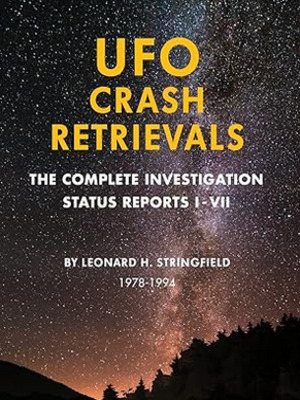
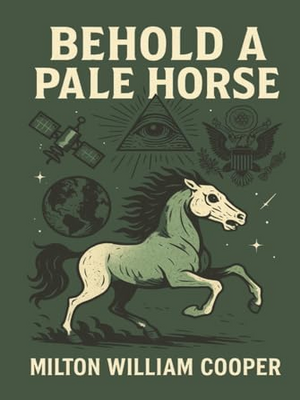

The discussion threads together a provocative view of a long shadowed arc in which a secret UFO file looms as the highest-stakes issue for leadership, while a century of hardwired secrecy keeps most of the public in the dark. The central claim is that the file is real, that the current administration’s push toward disclosure is being checked by a powerful background apparatus—an “expert protection group” tied to intelligence communities—that has guarded breakthrough technologies for eight decades. Public disclosure, in this view, would threaten a geopolitical and national-security nest of power, and so any Trump move to reveal a portion of the truth would be met with intense resistance, even as Trump could potentially leverage the situation to force a shift in the balance of information. The conversation situates this drama within a larger historical pattern. Past presidents have faced the abyss of disclosure and balked, because the stakes are said to involve not just aliens but a sprawling, deeply entrenched system of secret technology and secret research. The speakers weave a lineage from the JFK era, through the Nixon era, to postwar arrangements in which Nazi-era breakthroughs supposedly resurfaced through a covert network that outlived the war, migrated to the United States and Argentina, and then fed into today’s security-state frameworks. The claim is that the UFO file sits under executive branch control in theory, but in practice has been hoarded, catalogued, and manipulated by a web of agencies, think tanks, and former scientists who keep it out of public reach. A focal point is the so-called Bell, or Die Glocke, the notorious Nazi project that is treated as emblematic of the era’s most exotic science. The dialogue leans on Vitkovsky’s account and related lore to sketch a device allegedly built around a serum called “525,” a cherry-red liquid that, when counterrotating and pulsed with large amounts of direct current, could create a levitating plasma field. The story ties the Bell to intense radiation and even fatalities among scientists, and it threads that technology into broader questions about energy generation, gravity manipulation, and possible propulsion. The narrative treats the Bell not as an isolated curiosity but as a prototype of a line of “breakaway technology” the Allies and later the Americans allegedly sought to harness, conceal, or weaponize. A series of interwoven threads follow from there. One path traces the postwar dispersal of scientists and patents—largely described through the infamous “paperclip” network—and the contention that the Bell’s deeper knowledge remained with a subset of Nazi engineers who relocated to places like Argentina, where rumored test facilities and advanced aircraft (such as the Junkers 390) supposedly still exist in the shadows. Another path links the Bell to a broader family of technologies the Nazis were pursuing, including early laser isotope separation, jet propulsion, guided missiles, and coded projects that, in the telling, foreshadow a highly secret space program. The conversation suggests a lineage from the end of World War II through the reunification of Germany, arguing that the opening of old archives has begun to reveal the extent of exotic tech and the lengths to which factions would go to protect it. The Kexburg crash of 1965 is presented as a key corroborating case—the “acorn”-shaped object with hieroglyphs that allegedly touched down in Pennsylvania, was seized by the military, and tied by witnesses to underground testing in ceramic-lined facilities. The link to the Bell is made through design cues and a shared vocabulary of arcane engineering and hidden storage methods (ceramic bricks, special gaskets, and high-voltage plant infrastructure). The claim is that the Bell or its close cousin was moved and concealed in networks that crossed continents, with Canada and the United States appearing as nodes in a global map of covert discoveries and contested ownership. Alongside the Nazi-technology thread runs a broader speculation about spaceflight, race to the Moon, and the possibility that cooperative or competitive dynamics between the United States and the Soviet Union shaped the public timeline of lunar exploration. The speakers entertain the notion that hidden, exotic propulsion or energy systems—possibly rooted in the Bell’s lineage—could have enabled manned missions beyond what ordinary chemical rockets could achieve. They also entertain the idea that some space ambitions, including Mars outreach, might have been kept covert, with hints appearing in “Alternative Three” and similar sources that a secret space program operates out of public sight. The dialogue remains cautious about verification. It often frames claims as unproven possibilities, inviting readers to weigh circumstantial evidence, cross-check archival leads, and judge the plausibility of connections such as the Bell’s sacerdotal aura within the SS and German occult circles, the movement of scientists to Argentina, or the theory that artifacts and know-how threaded back into American industry and NASA leadership. The speakers acknowledge that the historical record is fragmentary and contested, and they consistently urge readers to scrutinize testimony, affidavits, and obscure correspondence while recognizing the uncertainties that shadow these narratives. Toward the end, the conversation pivots to ongoing research and publishing plans. The speakers point listeners to a site hosting a wide range of related material and endorse forthcoming works that promise a lawyer’s approach to piecing together a plausible case from circumstantial evidence. They also touch on cultural curiosities and the broader mythology surrounding Atlantis, secret societies, and the twilight zone where science, politics, and esoteric tradition intersect. In sum, the exchange maps a provocative, if controversial, tapestry: a claim of a persistent, high-stakes struggle over the most exotic science of the modern era, a history of postwar secrecy that continues to shape present-day possibilities, and a stubborn invitation to look more deeply at the gaps—however large they may be—in what we think we know.
Source: youtube.com