The Quest for Extraterrestrial Life: Politics, Science, and Culture

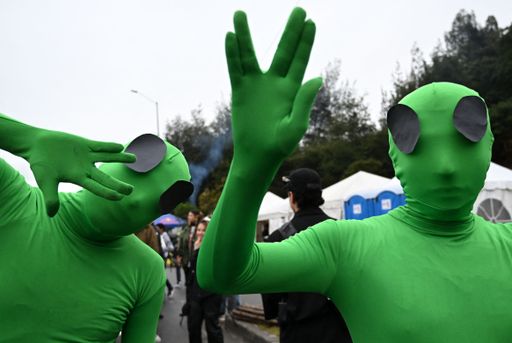
The piece surveys the enduring fascination with extraterrestrial life, driven by renewed political and scientific attention. It notes that US President Donald Trump directed federal agencies to identify and release all files related to aliens, UAPs, and related topics, a move that follows years of curiosity, hearings, and public debate. The announcement intersects with long-running rumors and historical sightings that have shaped popular imagination. Historically, notable cases are highlighted to illustrate how stories of otherworldly visitors have entered public consciousness: Roswell (1947), often cited as evidence of a downed alien spacecraft; the Betty and Barney Hill abduction (1961); the Rendlesham Forest incident (1980) in the UK; the Phoenix Lights (1997); and sightings such as the Ariel School event in Zimbabwe (1994) and the Broad Haven incident in Wales (1977). These episodes reflect a spectrum from alleged encounters and abductions to mysterious phenomena that fuel ongoing speculation. On the scientific front, the text emphasizes cautious optimism grounded in probability rather than proof. The Drake Equation attempts to estimate how many communicative civilizations might exist in the Milky Way, but it yields a wide range due to many unknowns. The Fermi Paradox questions why, given the universe’s vastness, Earth has not yet been visited. Contemporary efforts focus on exoplanets and biosignatures: NASA has confirmed thousands of exoplanets, the James Webb Space Telescope searches for signs of life in distant atmospheres, and astrobiology missions probe Mars, Europa, and Enceladus for microbial life. SETI continues scanning for signals, but no conclusive evidence has emerged. Overall, most scientists agree there is no definitive proof of intelligent extraterrestrials, though the universe’s scale keeps the possibility open. Geopolitically and culturally, the piece traces so-called alien hotspots (Area 51, Roswell, Rendlesham Forest, and the Extraterrestrial Highway) and notes how official investigations have evolved. Project Blue Book (1947–1969) sought to classify sightings and largely found explanations for the phenomena; more recent disclosures include leaked Navy videos in 2017, the Pentagon’s All-domain Anomaly Resolution Office (AARO) established in 2022, and reviews in 2024 that found no evidence of alien technology, with most cases attributed to misidentifications, drones, or classified programs. NASA’s 2023 independent study similarly found no proof of extraterrestrials. The topic also permeates popular culture, from early flying-saucer imagery to films, television series, and literature (The Day the Earth Stood Still, The X-Files, Close Encounters, ET, Star Trek, Star Wars, The War of the Worlds, The Hitchhiker’s Guide to the Galaxy), reinforcing a lasting association between science fiction and real-world inquiry. The term “little green men” remains a pervasive shorthand in this cultural landscape. In sum, the discussion ties together political action, historical sightings, scientific inquiry, government investigations, and cultural influence, underscoring a shared human interest in whether life exists beyond Earth—an interest marked by cautious skepticism, ongoing research, and enduring imagination.
Source: trtworld.com