
Bob Lazar, S4, and the Anti-Gravity Inquiry: Briefings, Encounters, and the Quest for a New Physics
To the point
Bob Lazar’s claim of working at a secret Area 51 S4 site to reverse‑engineer a gravity‑altering 53‑foot saucer anchors a broader, contested anti‑gravity inquiry that links other researchers, documents, and secrecy rumors, and invites continued exploration of whether a radical new physics could exist.

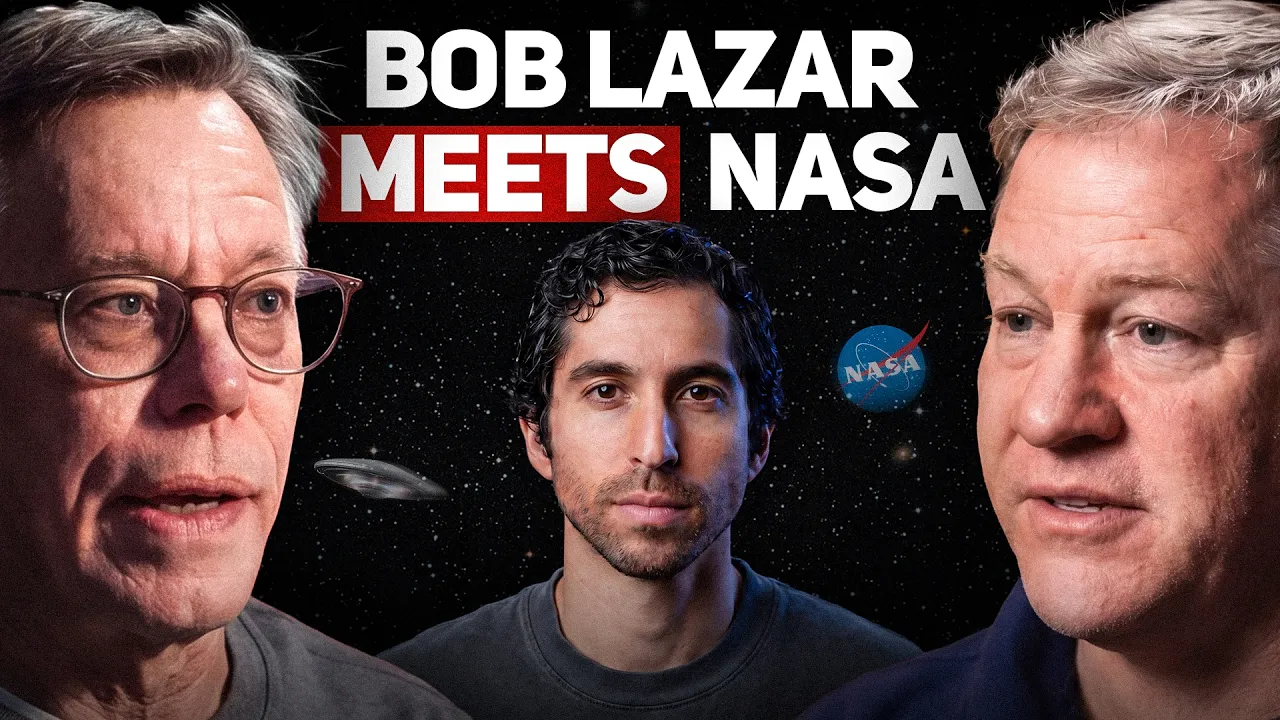
The centerpiece is Bob Lazar, who in 1989 claimed to have worked at a secret S4 facility near Area 51, reverse-engineering a non-human craft—a 53-foot saucer whose propulsion relied on three emitters to alter gravity, a project Lazar says has persisted for decades. The narrative traces his life from an early fascination with science and a combustible mix of talent and rebellion to a stint at Los Alamos and EG&G, his fateful recruitment into S4, and later attempts to re-enter the scientific world amid rumors about MIT and Caltech, including a memorable encounter with Edward Teller. Inside the S4 complex, Lazar describes briefing documents—Galileo, Looking Glass, and Sidekick—that framed dual directives: to duplicate the propulsion system and to be able to remotely disable it, with test flights showing a craft that seemed to defy conventional physics and even suggesting crewed operation via a radio link. He also recounts how many crafts were retrieved or staged for study, including an underwater Navy involvement and a “sport model” that resembled popular UFO imagery, while maps and access routes to S4 were later altered to obscure the site, and colleagues like Dennis Mariani and George Knap offered corroboration and perspective. The broader conversation weaves Lazar’s experiences into a web of anti-gravity inquiry—linking Towns and Brown’s early high-voltage experiments, bismuth’s unusual electromagnetic properties, element 115 as a potential fuel, and Ning Lee’s gravidomagnetic theory—arguing a through-line toward a genuine, albeit contested, physics of space-time manipulation. Against a backdrop of skepticism and intimidation, Lazar’s story intersects with journalists, researchers, and other whistleblowers, fueling a debate about government secrecy and the possibility that some evidence or demonstrations have seeped into the public sphere. Ultimately, the material presents a provocative puzzle: while not proven, the convergence of historical anti-gravity research, eyewitness accounts, and documentary evidence invites continued inquiry into whether humanity stands on the threshold of a radical new science.
Source: youtube.com