Faith, Secrecy, and the Push for UFO Disclosure: A Contested Landscape

To the point

A contested debate about UFOs combines insider claims of a forthcoming disclosure, religiously motivated resistance by high‑level insiders, end‑times conspiracy ideas such as the Collins Elite, possible links between evangelical and Catholic groups, and media commentary, while pressing for more openness on UK files and asking whether any supernatural or interdimensional aspects are part of the phenomenon.
Faith, Secrecy, and the Push for UFO Disclosure: A Contested Landscape

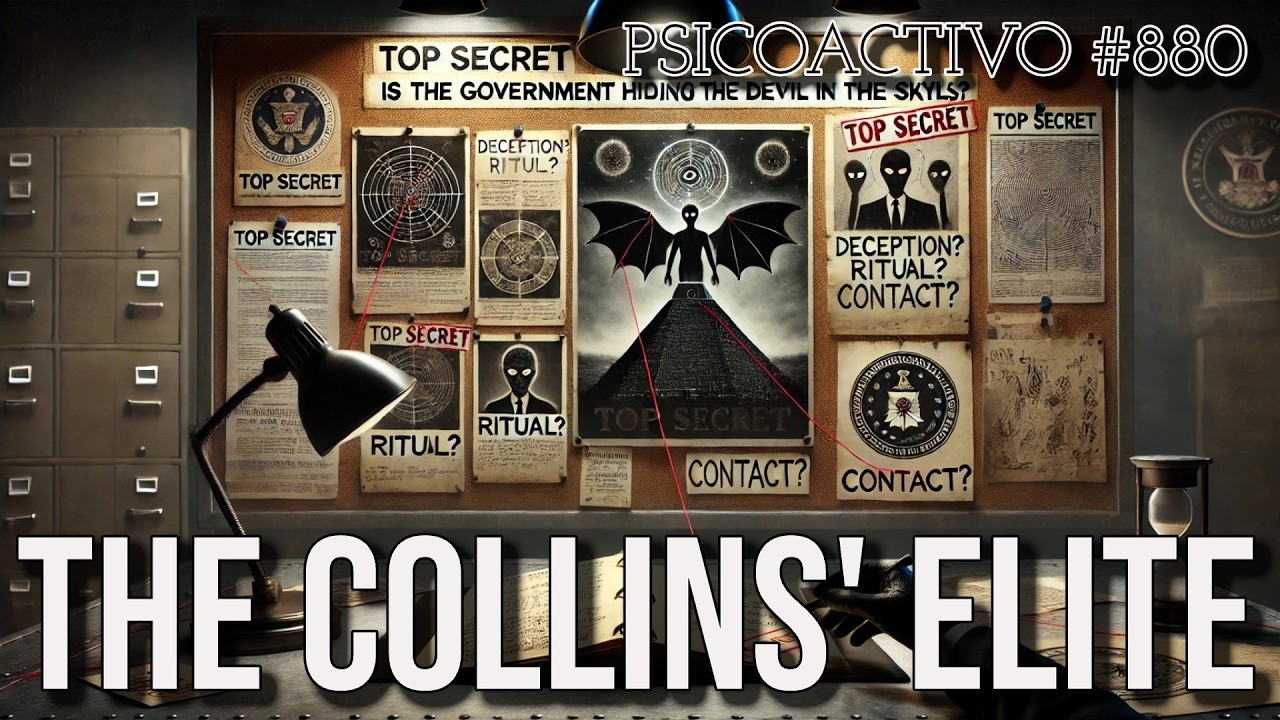
An intriguing, sector-skewed conversation unfolds around a figure known in UFO circles as Mark Christopher Lee, who markets himself as the “king of UFOs.” He has claimed that a historic, already-written UFO disclosure speech was prepared for July 8, 2026, and that a Washington insider has transmitted a fresh update: high-level Pentagon factions, motivated by a belief that parts of the phenomenon are demonic, are actively resisting full disclosure. This echoes warnings once voiced by Admiral Lord Hill-Norton decades ago, suggesting that a segment of the establishment fears an interpretation of the encounter as something truly otherworldly or even satanic. The current claim is that the July 8 speech may focus on conventional sightings—Roswell-era material—while deeper, more destabilizing interdimensional truths stay hidden for now. Simultaneously, there is mention of a push in the UK to release all British UFO files, including the Rendles Forest incident, with calls for serious parliamentary hearings to match the momentum seen in the United States. Beyond the specifics of timing and leaks, the thread pulls into a broader debate about how religious worldviews shape interpretations of the phenomenon and the politics of disclosure. On one side are voices who worry that discovering a full spectrum of reality would be too disruptive to public belief and social order, fueling a sense of secrecy as a protective measure. On the other side lies a more troubling line of inquiry: some insiders present disturbing, deeply unsettling possibilities about the nature of what is known or suspected, including a spiritual dimension that resists easy description and even defies comfortable disclosure. The discussion often circles back to Tucker Carlson’s past remarks and to coverage from Redacted’s Clayton Morris, underscoring how media personalities have engaged with the question of whether there is a supernatural or metaphysical aspect to the phenomenon. A central motif is the so-called Collins Elite, a vocabulary-heavy concept in which conservative evangelical circles interpret the UFO phenomenon as an end-times deception—an encounter opened by ritual acts that has allowed other forces to masquerade as extraterrestrials. The endgame, within this view, is to seal the world off from engagement with the phenomenon while mobilizing a moral and religious counter-movement in anticipation of an ensuing crisis. Yet there are competing strands. Some accounts connect the Collins Elite to Forom University, described as a Jesuit Catholic Knights of Malta power base, a linkage that contrasts sharply with the evangelical frame. The tension between these lines of thinking is sharpened by Valet’s journals, which hint at a timeline that complicates the conventional evangelical narrative and suggests possible cross-pollination between Catholic and other non-traditional perspectives on non-human intelligence, including the idea of a Christ-consciousness or a beneficial, even cooperative, interface with such beings. In this landscape, Redfern’s work and Kit Green’s testimonies are cited as corroborating threads, while a number of Republican figures who align with Christian fundamentalist beliefs—some previously associated with the UAP caucus—are described as people who may be misinterpreting the data through a filtered spiritual lens. Throughout, the speaker emphasizes that the subject is not settled: there are genuine, disconcerting implications that are hard to verify, and parts of the discourse remain speculation, contested timelines, and divergent worldviews. The tensions between secrecy, belief, and the unknown create a spectrum where some see a potential crisis looming, while others advocate cautious, measured inquiry. The call is for reader input on big questions—whether the phenomenon might be demons or angels, whether a real “Collins Elite” exists, or whether the disclosure could unleash a Pandora’s box of consequences—and to consider what might lie beyond if and when such disclosures unfold. As the discussion closes, the invitation to engage remains open: share thoughts, weigh the possibilities, and stay curious about how faith, power, and the unknown intersect in the ongoing conversation about UFOs, disclosure, and what lies beyond our current understanding. The message ends with a familiar reminder to support the channel through likes, shares, memberships, and reviews, while keeping the focus on thoughtful, inquisitive exploration.

Source: youtu.be
Our reading recommendations from Amazon: