
From Intelligence Briefings to Mystical Visions: The Dual Life of Ralph Moat Larson

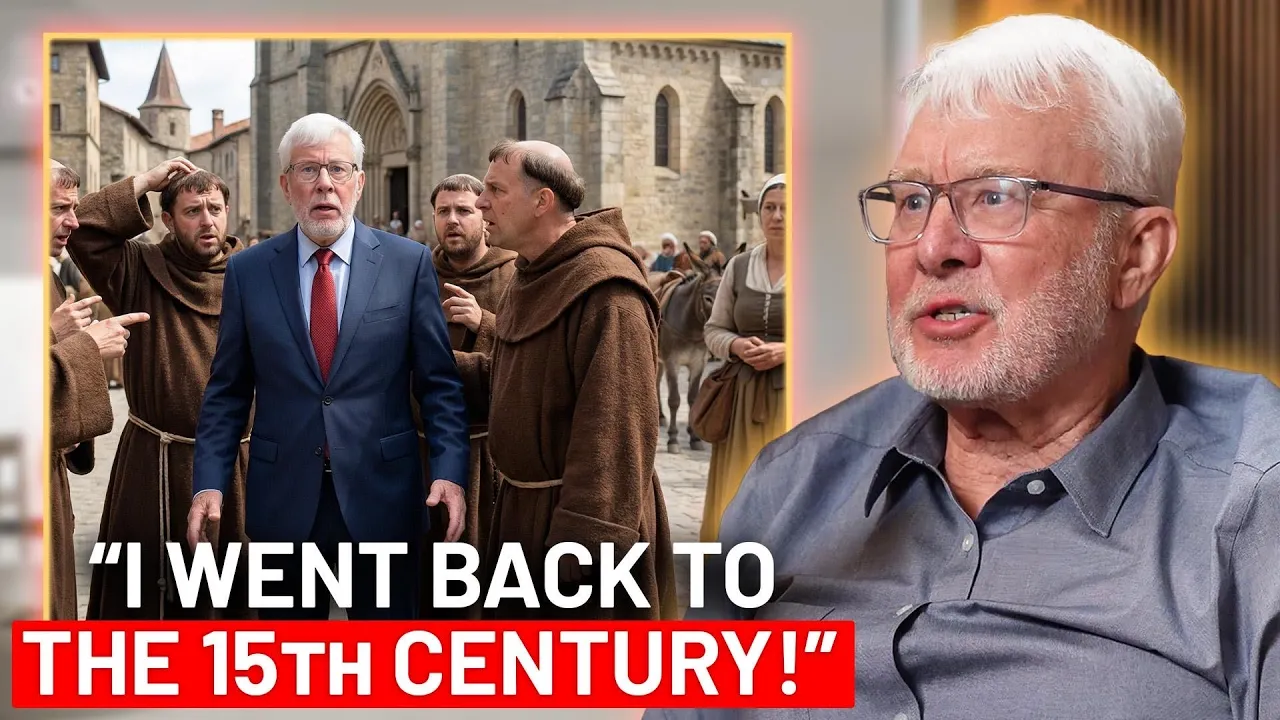
- Ralph Moat Larson is presented as a former CIA officer who went on to hold senior intelligence roles at the Department of Energy, including Moscow station chief and head of intelligence and counterintelligence. His career spans Europe, the Soviet era, the Middle East, counterterrorism, and nuclear weapons—pegged to highly credentialed briefings with the president, the Cheney/Bush circle, and senior U.S. and allied figures. He recounts pivotal moments such as briefing Abu Musab Zarqawi before the Iraq invasion, participating in near-real-time crisis management after 9/11, and weathering the 1993 Moscow coup in a context of U.S.–Russian cooperation. He reflects on the challenges of secrecy, decision-making under pressure, and the ethics of intelligence work, including a strong emphasis on truth, responsibility, and the limits of what can be known or controlled. - In parallel to his intelligence career, Larson narrates a string of extraordinary mystical experiences that he interprets as real and transformative. Starting in 1991 with a time-slip during a Monastic pilgrimage to Mount Aos (Monathos), Greece, he describes living as a 14th–15th century monk under the persona “Odius Maximus,” including a months-long resettling in a medieval world, burning his hut, learning to fly, and engaging in monastic life. Central to these experiences are a sequence of encounters with a Virgin Mary figure (notably in 1991 Portugal and 1998 Paris), messages he received (including a directive to write a letter to the pope), and a layered dream structure that culminates in spiritual instruction about self-transcendence, prayer, and duty to warn rather than control outcomes. He also recounts other visions, such as a 1980s–1990s pattern of “dreams within dreams,” and a 40-year arc of spiritual testing that coexists with his professional life. - The stories are richly interwoven with numerology and symbolic imagery (numbers like 747, 3/6/9, 12, 40, 7, 49, and recurring three/seven motifs). He describes how these numbers appeared in downloads and dreams and how they connect to broader religious and cosmological themes (biblical timelines, apocalyptic motifs, and the interplay between time and eternity). He claims corroborating moments and witnesses (including his wife’s concurrent dream memory) and insists on rigorous testing and discernment to separate genuine encounters from imagination. He credits the Virgin Mary with guidance—to write to the pope, to keep exploring the old/new church unity, and to understand that “old and new are one”—and he frames these experiences as essential to his spiritual growth and public vocation. - The dialogue probes the relationship between science and mysticism. Larson repeatedly reframes metaphysical questions in light of physics, quantum ideas, and notions of time as potentially non-absolute. He cites Einstein’s “God thoughts” quote and discusses the possibility of physics needing to account for experiences that lie outside conventional empirical verification. He also discusses the idea that time could be an emergent property or a dimension that may not apply in a timeless or “universe at rest” context, positing that revelations observed in dreams and visions might reflect deeper layers of reality that physics still grapples with. - Larson’s accounts extend to contemporary policy debates and UFO/“UAP” questions. He reflects on government secrecy, disclosure, and the potential reality of non-human intelligence, while stressing the importance of credible evidence and open inquiry. He shares experiences and opinions about high-level discussions on UFOs, Roswell, and the DOE/CIA nexus, acknowledging the tensions between securing national security and providing public accountability. He cautions against over-reliance on dogmatic interpretations and urges continuous, careful investigation, cross-disciplinary dialogue, and ethical responsibility in handling sensitive information. - The interview interlaces personal devotion, professional ethics, and a lifelong search for meaning. Larson ties his faith to a sense of duty—duty to truth, to the people he served, and to a larger purpose of warning against existential risks (nuclear proliferation, bioweapons, and other technologies with catastrophic potential). He emphasizes integrity, transparency where possible, and the necessity of discernment when confronted with extraordinary claims. While he offers vivid, highly personal testimony, he repeatedly flags uncertainties, invites scrutiny, and situates his experiences within a broader inquiry into how science, faith, and statecraft intersect in a complex modern world.
Source: youtube.com