
Inside the World's Largest UFO Archive: Artifacts, Radar, and the Quest to Understand Unexplained Phenomena

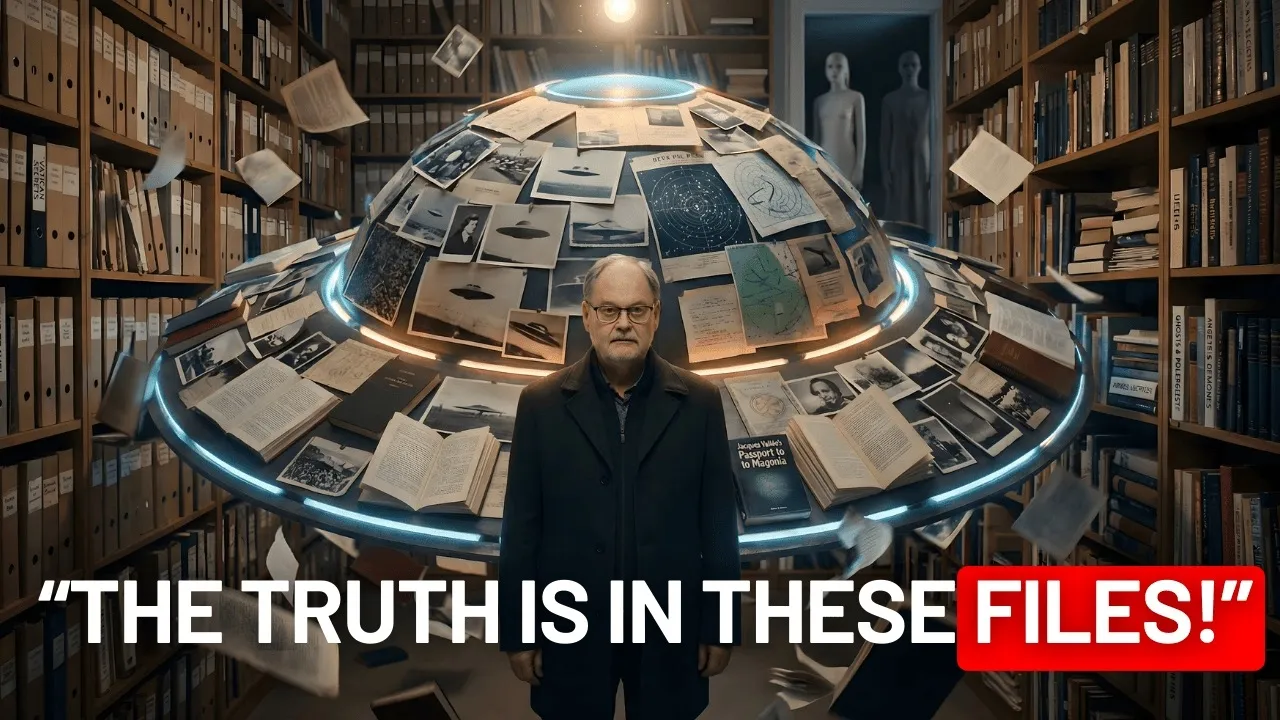
A Swedish UFO researcher, Claus von, and the Archives of the Unexplained (AFU) anchor a wide-ranging look at the unknown. AFU is described as the world’s largest UFO archive, housed in a 16-room facility with extensive files: witness reports, photographs, audio, radar data, video, and first-generation documents, plus material on time travel and other fringe topics. The conversation weaves through roughly a half-century of evidence that is often overlooked or contested, spanning physical artifacts, radar observations, and covert retrieval stories across Europe, especially Scandinavia. Key evidentiary strands discussed include: - Physical artifacts and material traces: a tungsten fragment from a 1957 sighting on V island in Sweden, lightning-hot to the touch and linked to a car’s heat effects; an asteroid fragment from Arizona (50,000 years old) with its iron/nickel alloy composition; and references to other debris or anomalous materials tied to certain sightings. - Radar and surveillance corroboration: instances where military or radar data align with eyewitness accounts, including a 2005 northern Sweden sighting with radar returns and two witnesses, and sixRadar observers in the North who reported a cigar-shaped object making sharp aerial maneuvers. - Water-focused crashes and ghost rockets: numerous reports of objects descending into lakes or crashing near water, with speculation about why water appears as a frequent medium for encounter endings. - Notable cases and figures in the broader field: Betty and Barney Hill (1961) and the memories surrounding their debunking, hypnosis, star maps, and debris; connections to other well-known researchers and controversial figures (Adamsky, Billy Meier, Henry Azadel, James Randi), and the tension between genuine data, hoaxes, disinformation, and cult-like dynamics. - Institutional and cultural context: involvement of European ghost-rocket phenomena, Norway’s Hesseløn, Gotland’s Matibu, and other hotspots; borderland science networks such as Borderland Science Research Association; discussions about how official programs, such as DoD and NASA-related activities, intersect with UFO inquiry (including references to Edgar Mitchell and related archival material). The dialogue emphasizes core methodological and epistemic issues: - The field is inherently difficult because high-quality evidence is scarce, testimonies are highly variable, and many reports blend physical, psychological, and perceptual elements. - Absurdity and misperception are common in accounts, which can complicate evaluation, but personal interviews and cross-checking with radar, photos, and independent witnesses can yield stronger cases. - There is a strong call for cross-disciplinary collaboration (science, psychology, consciousness studies) to address mind–matter questions and potential time-space phenomena, rather than seeking a single explanatory model. - The social and historical dimensions matter: how culture, belief systems, and media shape reporting; the risk of hoaxes or sensationalism; and the challenge of preserving witnesses’ accounts before they pass away. Overall, the conversation portrays a vast, intricate, and unsettled field in which a dedicated archival effort aims to catalog, verify, and understand a wide spectrum of experiences—from tangible debris and radar corroborations to perceptual phenomena and mythic dimensions—while remaining cautious about interpretation and openness to multiple explanations.
Source: youtube.com