
New Reaper UAP Footage over Syria: Technical Observables, Parallax Analysis, and a Call for Transparency




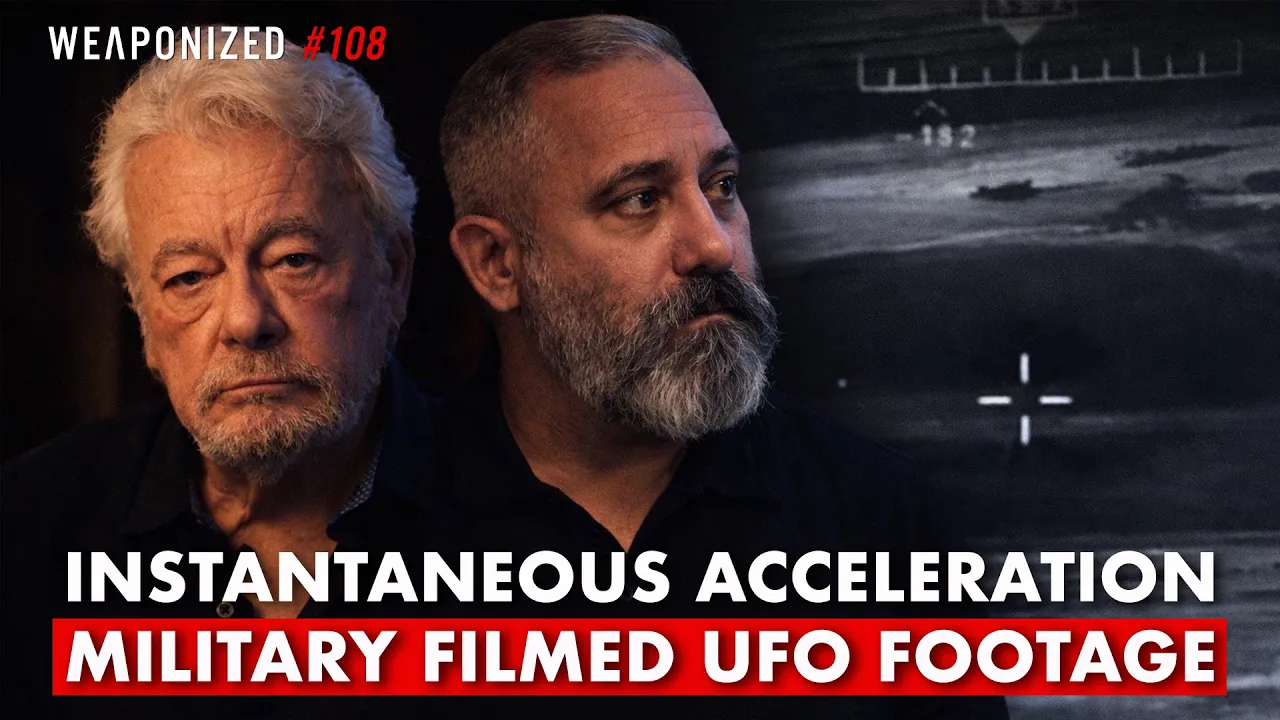
A discussion of a newly released UAP video from official archives centers on an MQ-9 Reaper observation over Syria near the Jordanian–Syrian border. The hosts emphasize that the footage designates the object as UAP and show two clips with interstitial title cards. Merrick Van Renamp, a former DoD and State Department analyst, offers an expert assessment, describing the imagery as extraordinarily compelling and outlining five or six observables. These include instantaneous acceleration, a wingless, non‑propulsive body capable of rapid direction changes, and potential hypersonic velocity. The object appears cooler than its surroundings (a black-hot sensor reading), which is notable for propulsion or flight signatures, and the footage shows a lock-on followed by a sudden departure that seems to defy conventional aerodynamics. Technical context is laid out in detail: the camera is on a Reaper’s forward sensor, the scene is northward with minor eastward deviation, and data such as azimuth, elevation, ground position (MGRS), and field of view are discussed. Parallax analysis is used to argue that the movement is intrinsic to the object rather than a camera artifact, as the background moves in a way that cannot easily explain the maneuver. The discussion also references prior famous cases (the gimbal and tic tac videos) and argues against straightforward mundane explanations like birds or balloons, noting that balloons struggle to account for the observed directional changes. There is mention of open-source work (e.g., Mick West’s 3D simulations) and a call for a fuller geometric visualization to strengthen interpretations. Beyond the technical debate, the conversation tackles transparency and governance issues. The footage is described as part of a broader intelligence analysis, with a critical stance toward classification and the long-standing “playbook” of under-sharing surprising data. The speakers advocate releasing more data to the public and to Congress, arguing that there are many additional open videos and that Arrow (the Pentagon’s UAP office) should provide access to this material. They acknowledge tensions between journalism, national security, and the public’s right to see potentially transformative footage, concluding with appreciation for Merrick’s input and signaling plans for further analysis and discussion.
Source: youtube.com