
Revisiting a 1966 Pulsating-Light Case: A Data-Driven, International Investigation into a Ground-Localized Energy Event
To the point
A 1966 case near the Arkansas–Louisiana border is being reanalyzed with international collaboration and modern non-destructive tools to quantify a ground-based, energy-rich event seen as a bright pulsating sphere, using bark samples, weather and infrared data, and refined energy-geometry models to test explanations and push a science-based approach to unidentified phenomena.
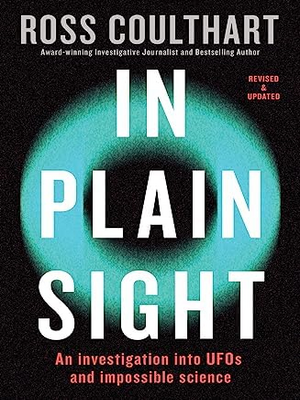

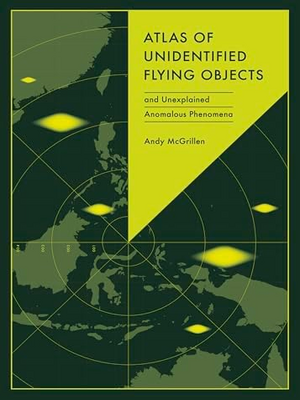


Across a long-running effort to synthesize hundreds of unexplained cases gathered in a large, Defense Department–funded data project, one account from 1966 is presented to illustrate the kind of careful, physics-based inquiry that can still yield fresh insights many decades later. The core story centers on a family of four driving near the Arkansas–Louisiana border on December 10, 1966, who observed an intensely bright, pulsating light in a forest clearing under rainy, near-freezing conditions. The object appeared over a mile away, emitted light that shifted from white to orange, and seemed to radiate energy rather than merely heat the surrounding trees. The witnesses reported the event to authorities, and subsequent investigations over the ensuing years—led by figures such as Professor Condan and scientists linked to the Condan Commission—explored how to quantify what they saw. Early work established that the scene took place in a large industrial forest area, with a clearing roughly 10 meters across and trees surrounding it that showed signs of radiation damage. Energy estimates from competing analyses varied, but both Condan’s team and later independent assessments suggested energy levels far above what would be expected from a small, conventional object, placing the event in a range comparable to a nuclear-scale energy release. The object was described as a pulsating glowing sphere, perhaps two to three meters in diameter, whose brightness intensified as it radiated energy and then faded, all while remaining largely on or near the ground rather than behaving like a typical flying craft. The four witnesses later connected with additional sightings in the surrounding weeks, which reinforced the impression of a powerful, localized energy source rather than a conventional aircraft. A notable aspect of the investigation was the detailed, multi-source data gathering: precise location data, weather records from nearby stations, infrared aerial surveys conducted by Condan’s team, and a bark sample taken from trees in the clearing that had clearly absorbed radiation. Although the bark was initially sent to a government lab and preserved only after later inquiry, it was retained as a potentially unique, non-destructive record of the energy interaction with organic material. This material—together with the clear, quantitative data about distance, lighting, and environmental conditions—enabled researchers to model the possible geometry and energy coupling more rigorously and to imagine what layers of energy deposition might reveal if the bark could be examined with modern, non-invasive techniques. What followed was a shift from a single-case focus to a broader, methodological reapplication. A Franco–American–global collaboration began to revisit the case with new tools and updated information, drawing on the expertise of the Sigma 2 commission in France and contributions from researchers at Stanford and Columbia, among others. In Paris, two alternative models of what happened were developed, and the analysis broadened to include reassessments of weather data, nearby terrain features such as an old railroad line, and more precise calculations of emitted energy. The work suggested that the observed phenomena could not be easily explained by a small, ground-based source or by a conventional aircraft, and it emphasized the importance of examining pre-1970 cases with careful attention to location, military or intelligence interest, and historical context—rather than treating early data as merely quaint or marginal. Looking ahead, the team is pursuing non-destructive analyses of the preserved bark to search for energy-deposition signatures that might be layered over time within the wood, potentially revealing how the energy interacted with organic matter during the event. They are seeking collaboration with specialists who can study such materials without compromising the samples. The overarching aim is to extract reliable, repeatable physical inferences from a historically anomalous event, integrating it into a broader science-based program for unidentified phenomena. The narrative also situates Blue Book and Robertson Panel discussions within a historical arc: while the official stance often suggested limited scientific interest, the record shows that serious data exist—including naval sightings and other cases—that warrant careful instrumentation, interdisciplinary collaboration, and a disciplined search for patterns beyond sensational headlines. In sum, the account argues for a cautious, data-driven approach to unexplained observations that values robust historical data, cross-border collaboration, and modern analytical tools. It contends that a new era—inspired by contemporary researchers, infrastructure, and instrumentation—offers the prospect of turning old, well-documented cases into meaningful scientific insight, rather than letting them fade or be dismissed.
Source: youtube.com