
A Statistical Framework for Interstellar Panspermia: Probing Life Transfer via Spatial Correlations in Star Clusters
To the point
Claudio Grimaldi, Manasvi Lingam, and Amedeo Balbi propose a mathematical framework to test interstellar panspermia by linking how long microbes survive, how stars move, and how ejecta spread, arguing that spatial clustering of life-bearing systems could signal panspermia when ejecta speeds overcome stellar motions, with open and globular clusters identified as the best places to look and the likelihood of detection depending on survival lifetimes and environmental dynamics.

The Extraterrestrial Species Almanac: The Ultimate Guide to Greys, Reptilians, Hybrids, and Nordics (MUFON)
Craig Campobasso
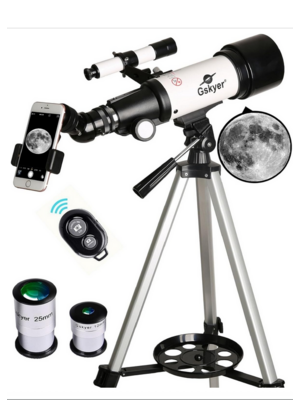
Gskyer Refracting Telescope

Passport to Magonia: From Folklore to Flying Saucers
Jacques Vallee
Chariots of the Gods: 50th Anniversary Edition
Erich Von Daniken
Our recommendations from Amazon
